Today we visited our third UNESCO World Heritage site on this trip, namely Fraser Island.
We were picked up for our tour at 7:45 a.m. after a very noisy night. Cyclone Oma is just off shore and as a result, the winds have been very strong. The palm and other trees near the hotel were hitting the metal roof on the hotel making quite a racket. From Fraser Island down to the Queensland/New South Wales border are under a cyclone watch as well as a king tide warning. A king tide is a higher than normal high tide, typically due to high winds.
I was concerned that our tourwas going to be cancelled due to the high winds but the one hour ferry ride from the mainland to Fraser Island went well as it was on the sheltered side of the island.
Fraser Island became an UNESCO site in 1992 after the UN visited the site in 1991 but held off because logging was still being done on the island. The logging company agreed to leave, the UN named the island a world heritage site within months. The island is unique for the following reasons.
- The island is 100% sand
- The island is home to 40 perch lakes. There are only 80 in the the entire world.
- The island sustains a rain forest.
After arriving on the island, we headed to Lake Mackenzie, one of the largest and accessible perch lakes. A perch lake is a lake that has is no feeds from nor feeds any other water sources. The only source of water is from rain. Over hundreds of years, the debris from the surrounding trees fell into a hollow created from the blowing sands which made a lining to trap the water. The sands around the lake are baby powder soft and absolutely white as it 100% silica/white quartz. Due to the warm weather, the water in the shallows was bathtub warm.


We then went for a walk at the former logging campsite and the rainforest. We were reminded to be on the lookout for dingos as the island is home to about 150. They can be quite vicious so there are lots of signs warning people to be careful.

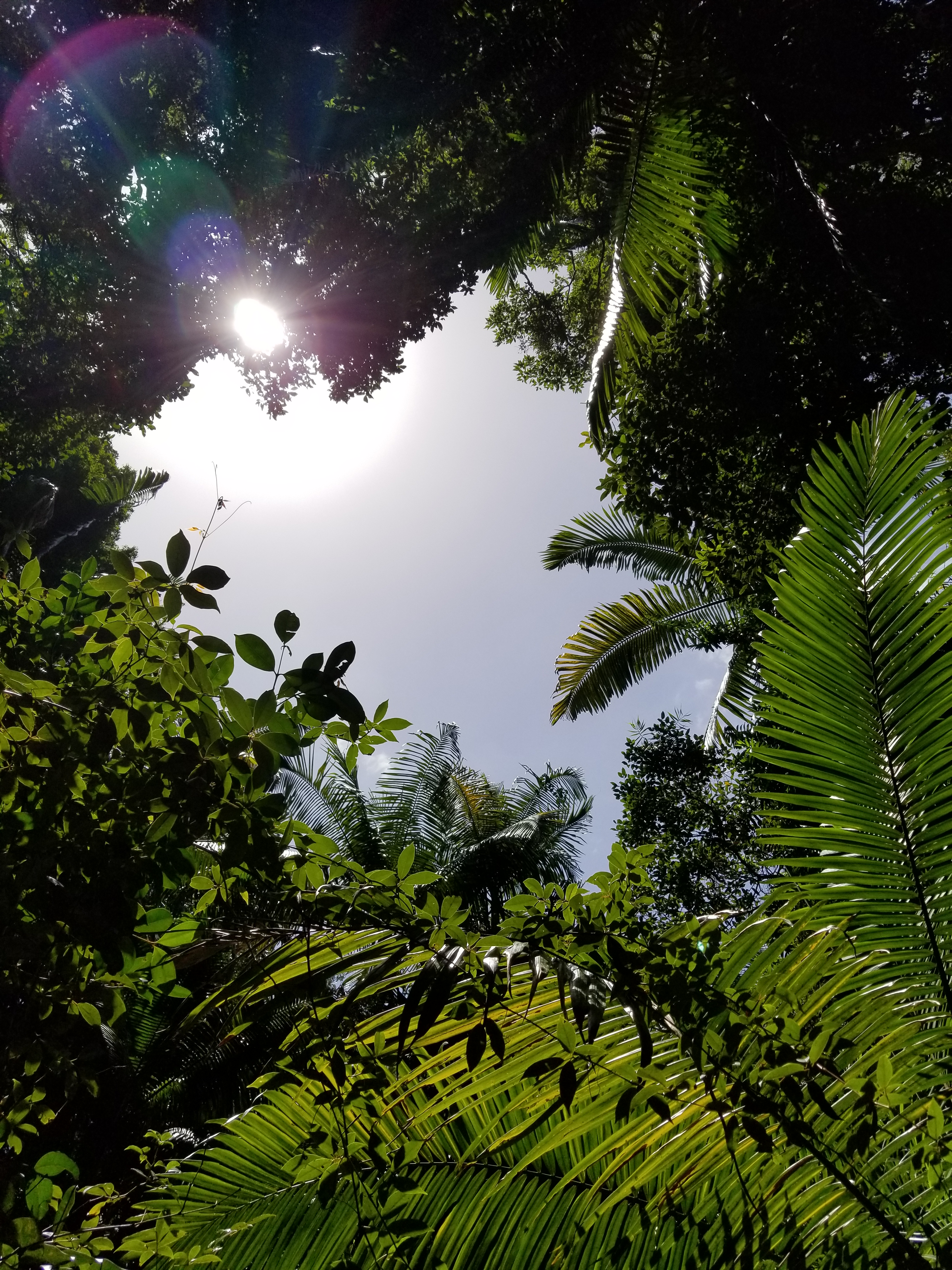
While at the logging camp/rainforest walk, one of the other tour buses got stuck and our bus was asked to rescue them. Our next stop was a buffet lunch at Eurong where there is a resort. Due to the winds, a tree had fallen across the road and as the roads are a single lane, our progress was stopped until it was removed.
Fraser Island is about 123 kms long and on the eastern shore, you can drive the entire length on the shore. There are actually road signs as it is considered a road. At the start of the day, the tour guide/driver was concerned that we would not be able to see the sights on the eastern shore due to the extreme tides. High tide was in the mid-morning so our guide hoped thigs would be a go after lunch.
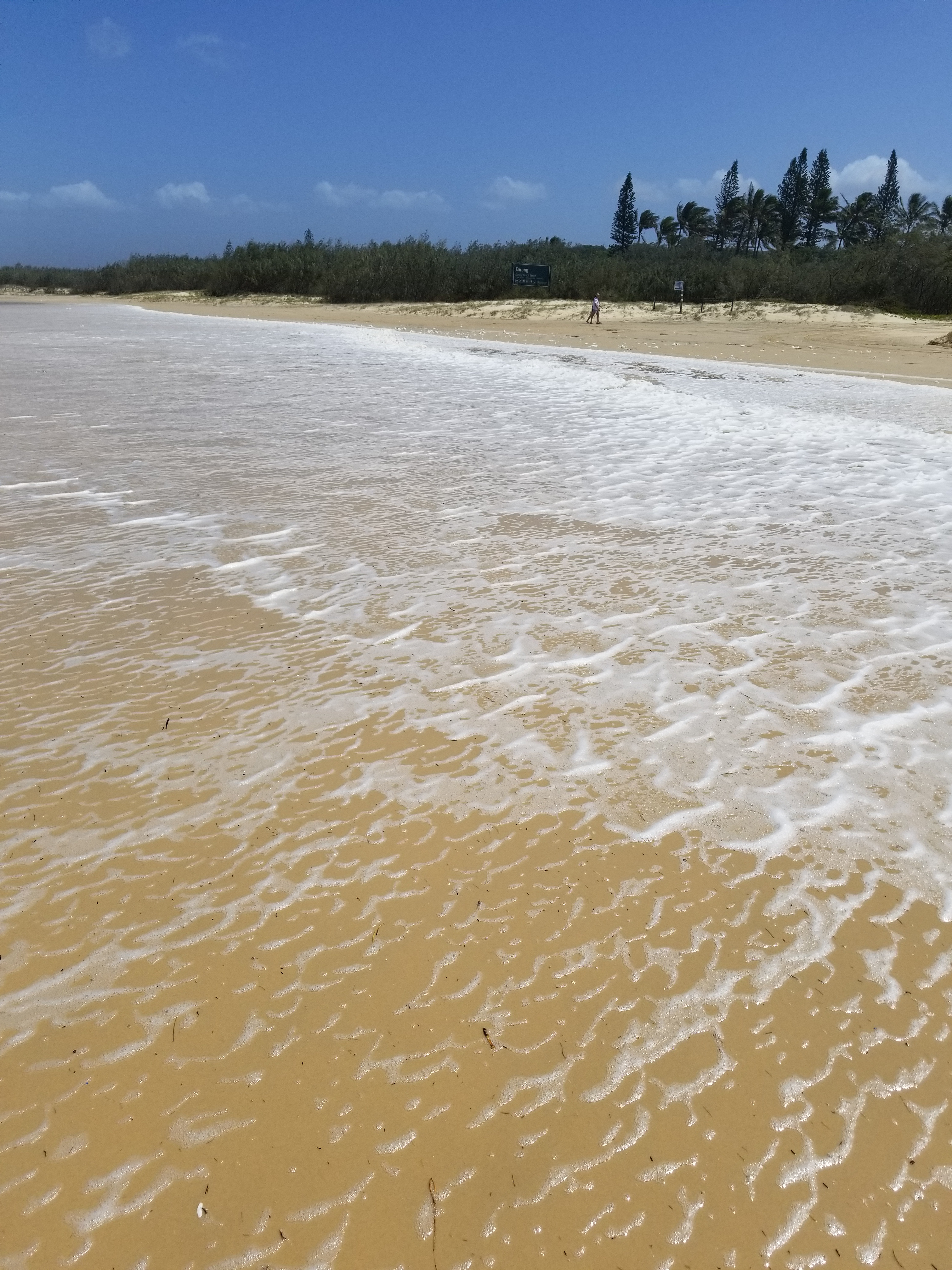
After lunch and before we resumed the tour, I took a walk down to the beach. The wind was still very strong causing me to be pelted with sand. The water was just wave upon wave which created a lot of foam which was also blown across the sand.
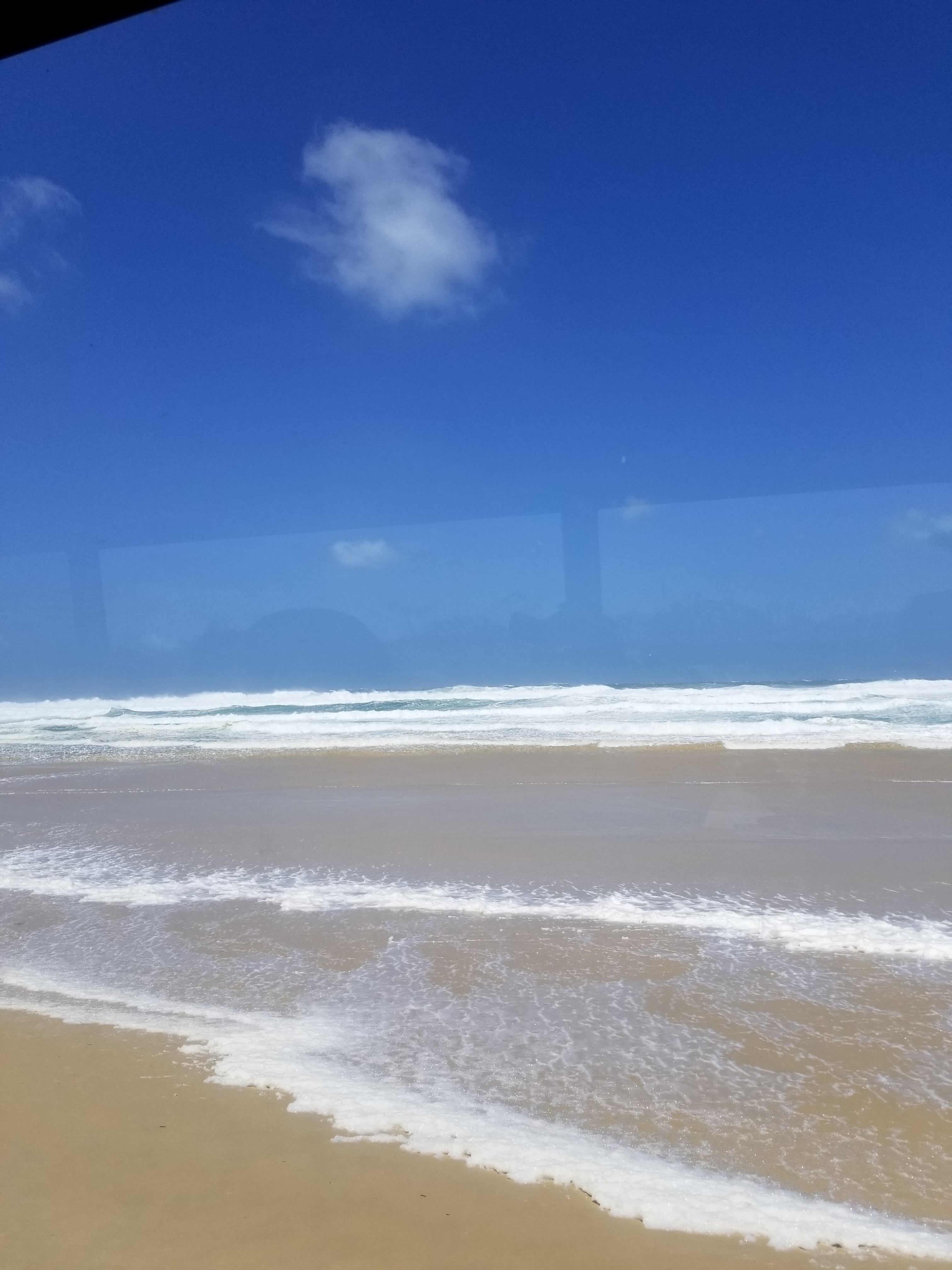
As we continued our tour down the the eastern shore, the tour guide, who has been doing this tour for 13+ years, commented that he has never seen the waves as high as today. He estimated the waves were 9 metres high.
We saw a dingo in the dunes but we could not stop for a photo as the water was so coming so high onto the beach and it made the sand soft which could cause the bus to get stuck. We were sitting on the opposite of the bus so I wasn’t able to get a photo.
Our next stop was the remains of a shipwreck. The ship was built in the early 1900’s and was used during the First World War as a hospital ship. In the 1930’s, it was being towed to Japan who was going to salvage the iron as there was a world shortage.

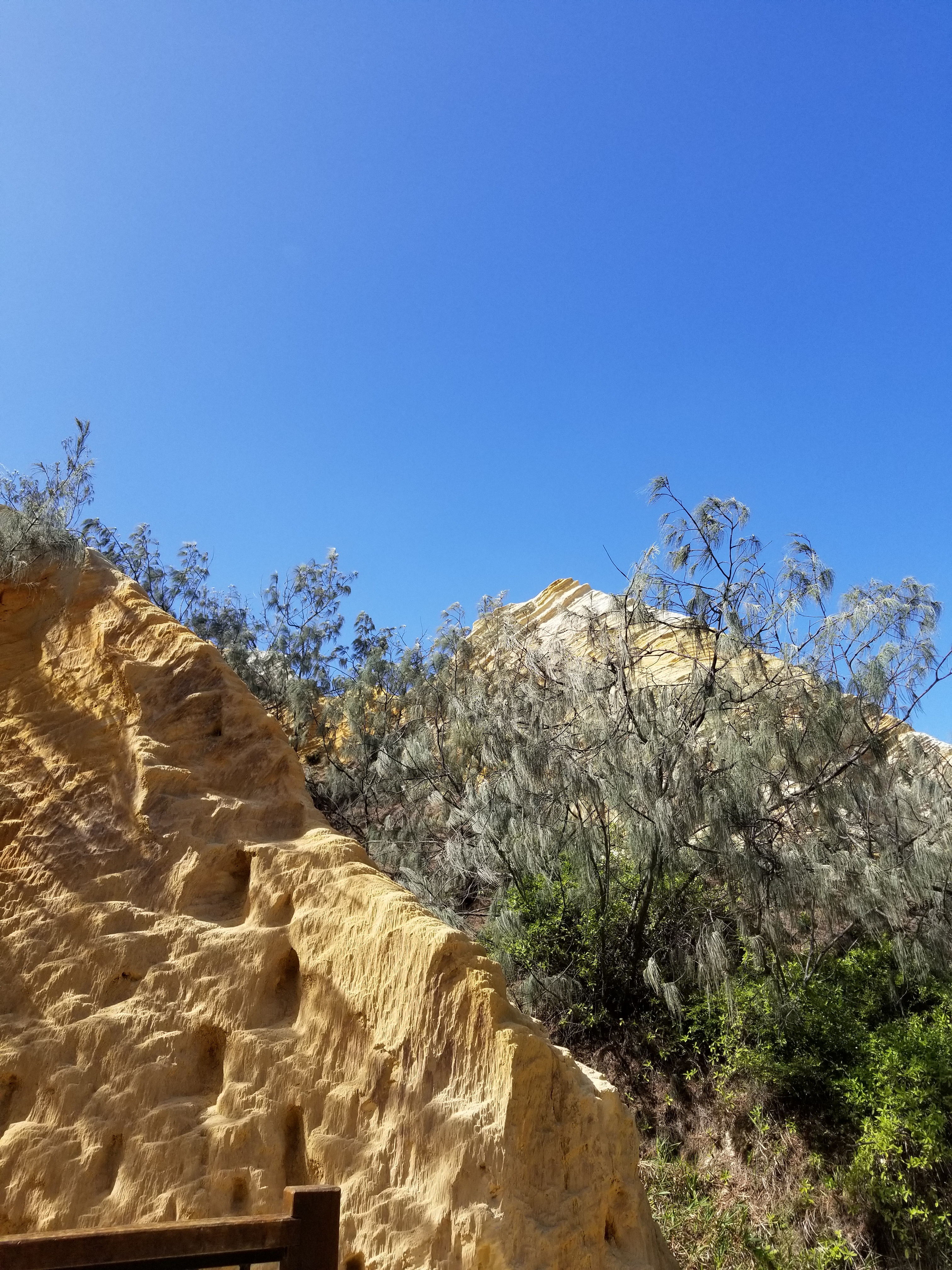
Our next step was the Pinnacles, an area that shows the different coloured sand found on the island. Basically, new sand is a cream colour that covers the white silica/granite. The cream colour erodes away leaves the white sand.
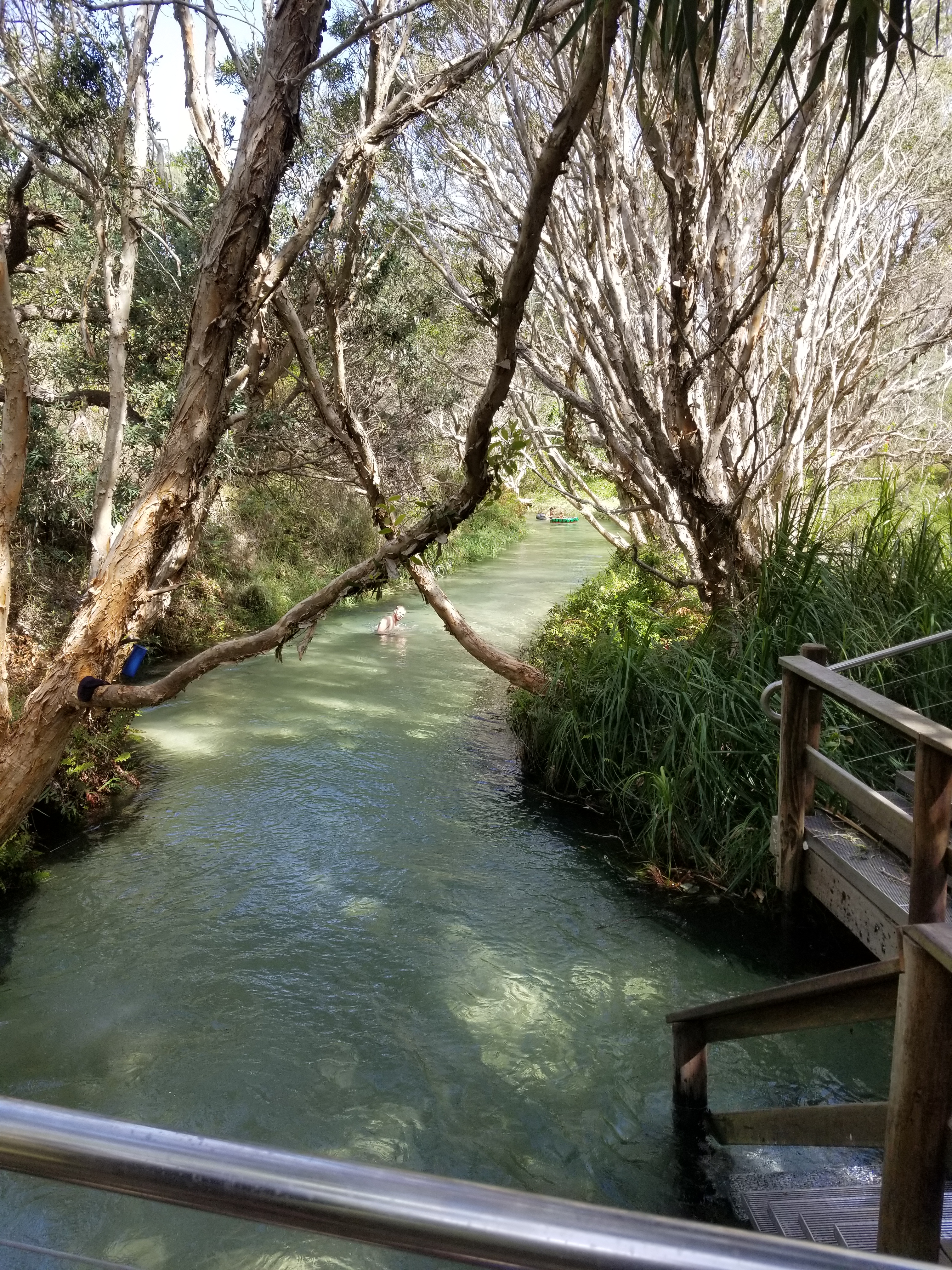
Our last stop was Eli Creek where you can inner tube down the creek to the ocean. Earlier in the day, our guide told us that the water in the creeks are fresh water that is comes out of the sands and the water in the creeks are from rains that fell about 150 years ago that finally worked its way to the surface.
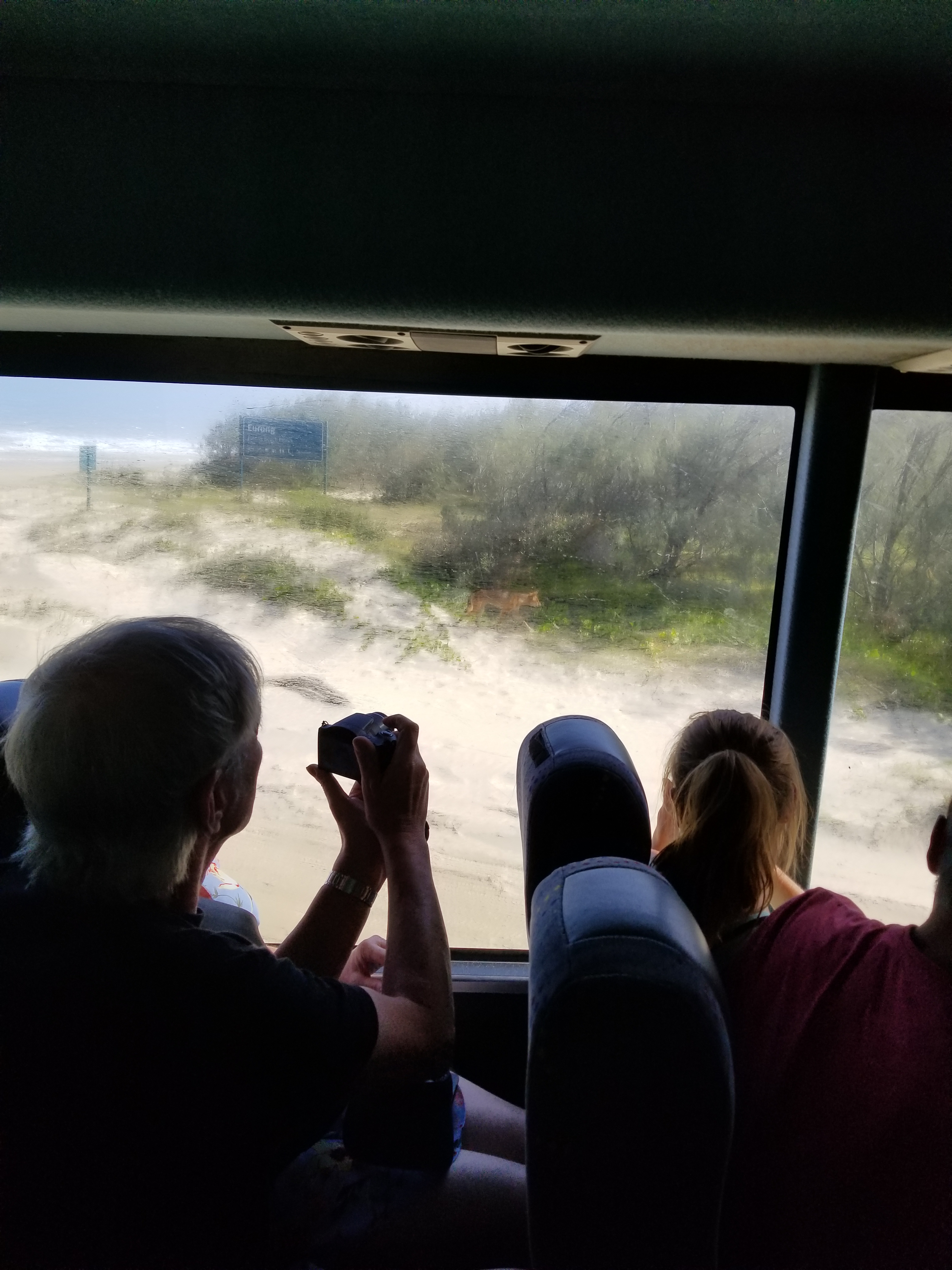
On our return trip, I kept on the lookout to see a dingo and had given up hope as we approached the Eurong Resort when there were two dingos in the entrance way. Again I was on the opposite side of the bus but was able to get a photo of one of the dingos.
The ferry to the mainland left at 5:00 p.m. so our tour needed to end.


 Hopper Oz Adventure