Sadly, today is our last full day in Australia. We started the day doing some laundry and, while Michael stayed at the accommodation to monitor the laundry, I took the bus and tram to downtown Melbourne to do some shopping.
While it took longer than anticipated, it was interesting seeing the arcades which are century old shopping malls with quaint little shops. There is a lot of construction in the area as Melbourne expands its train system.
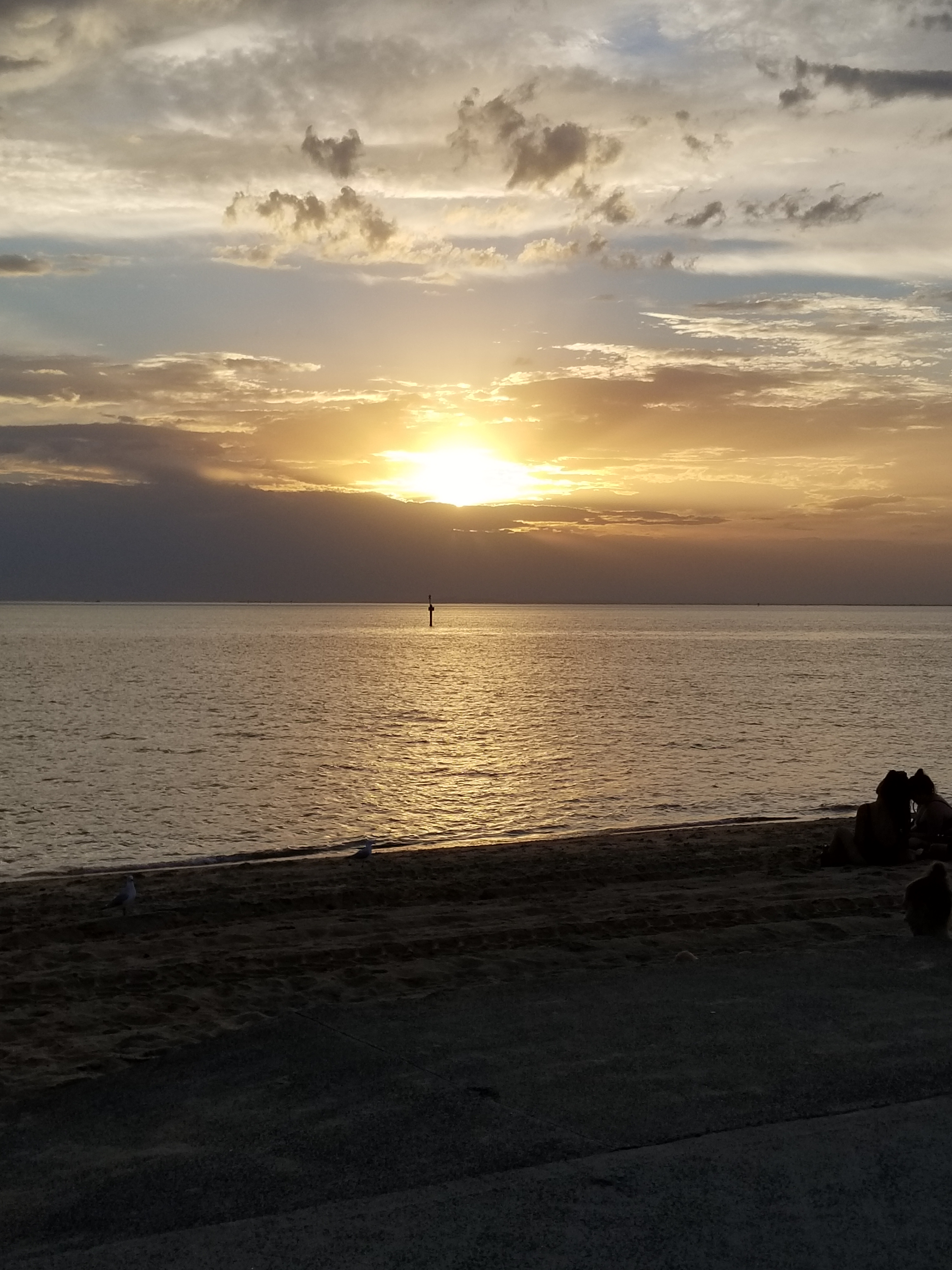
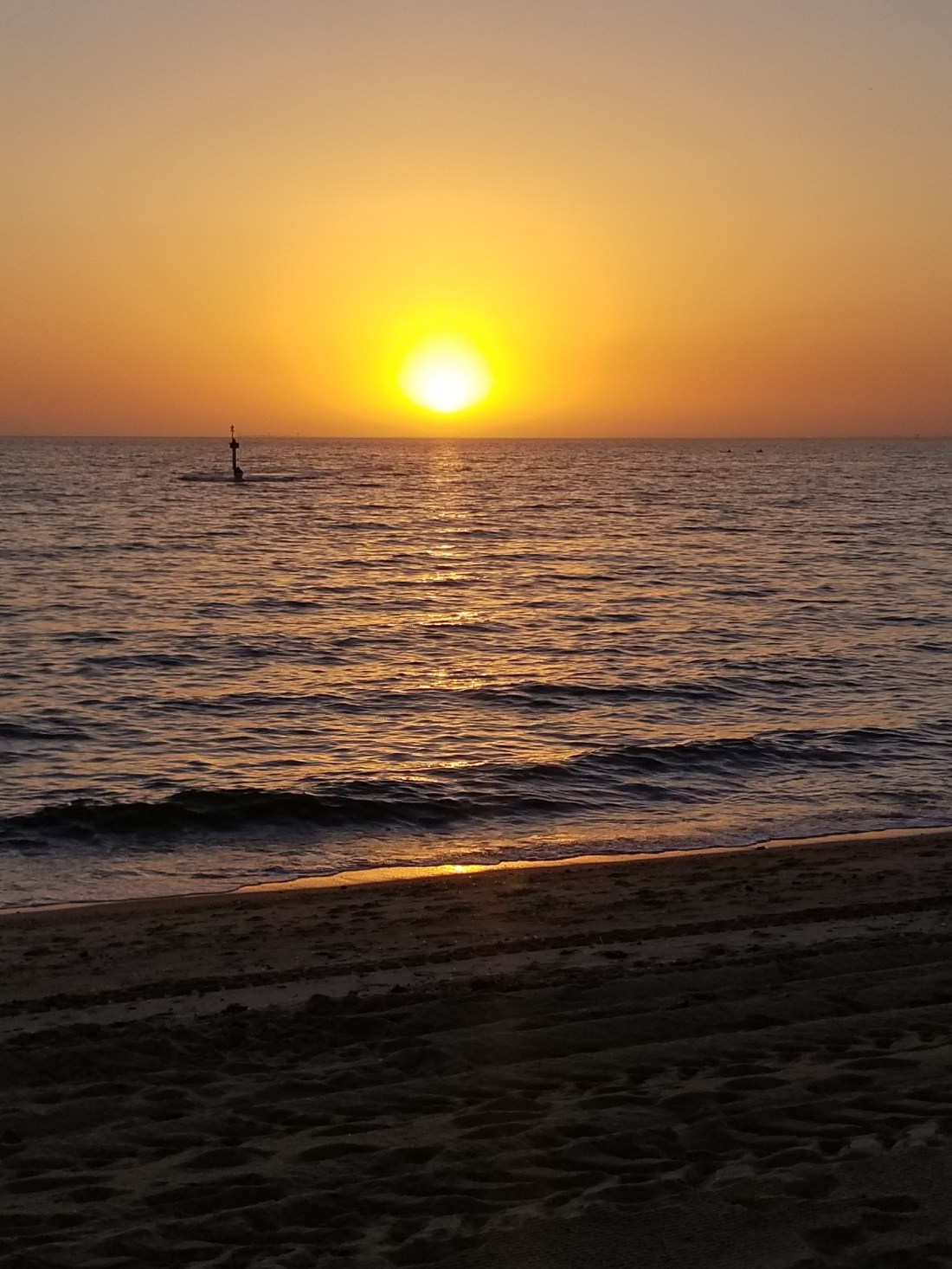
This evening, Michael and I went out for a final dinner at a resturant on Elwood Beach. There were lots of people on the beach this evening as it was 36c today. The sand on the beach is not a nice as many of the beaches we have seen but unlike the other beaches we have seen, there were no lifeguards on duty.
So our adventure in Australia ends but what wonderful memories.
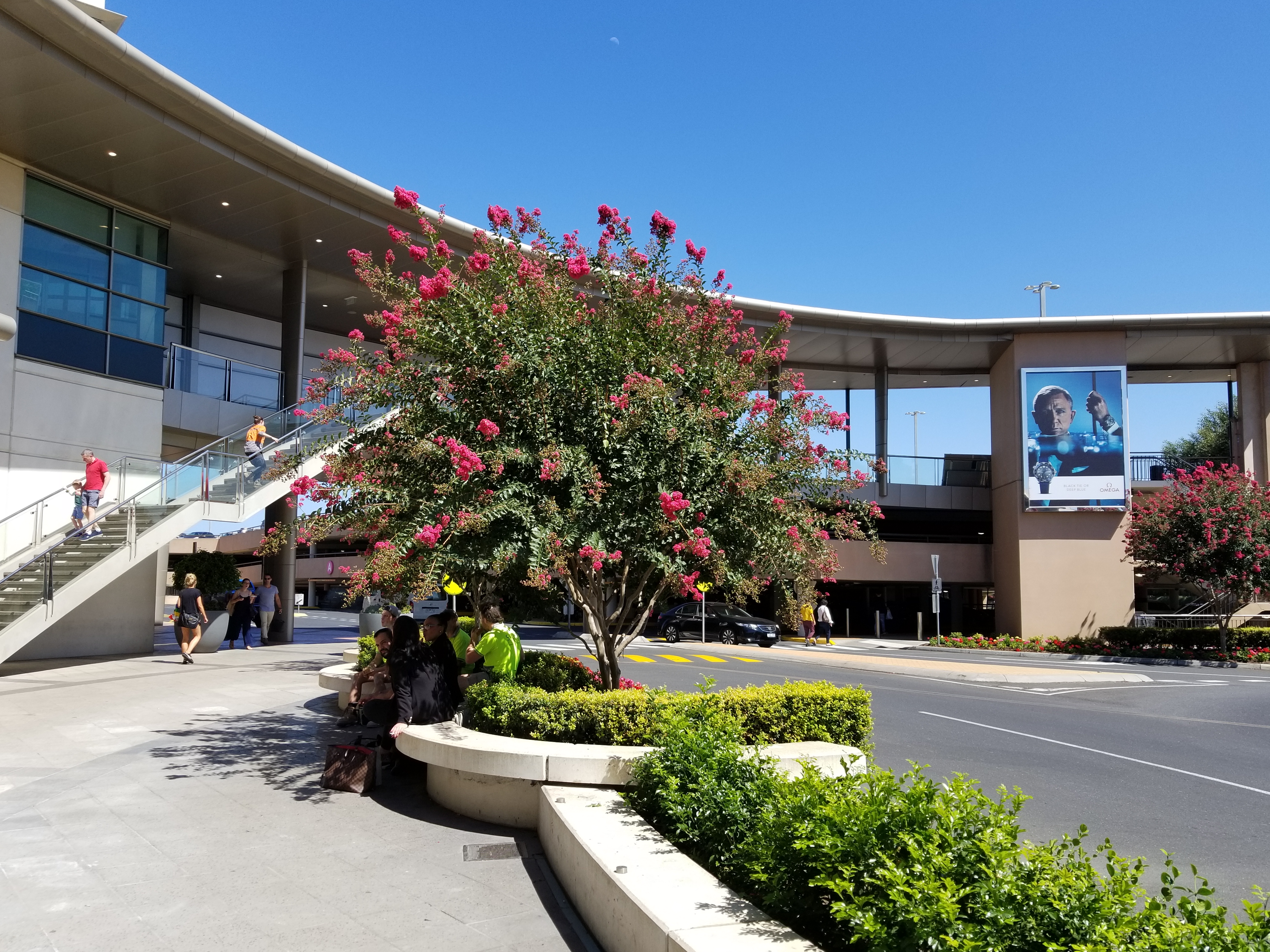
Our big adventure for the day is to check out the largest shopping mall in the southern hemisphere, Chadstone Shopping Centre. We chose to take the bus which took us through a lot of residential areas. The houses are typically bungalows and most have tiled roofs. Like other residential areas we have seen, most yards have fences or brick walls surrounding their entire yards.
The Chadstone Shopping Centre is very large by Australian standards. About 1/4 of the mall is occupied by designers stores, like Louis Vitton, Tiffany, Jimmy Choo, Dior, etc. To provide personal service, these stores have queues.
Surprisingly, there are lots of North American based stores, like H&M, Footlocker, Wiliam-Sonoma in the shopping centre.
Michael had made arrangements to pick up some items related to his hobby so we took a short walk from the mall to the shop. The owner of the shop took us for a tour where we saw how he made the moulds and his “secrets” for making the figures.
After our tour, we stopped at a local bakery where we picked up some sausage rolls and a meat pie for our dinner. We then caught our bus and returned to our accommodation but not after taking a rather extended bus ride because our driver gave us some wrong directions. It meant we had a long walk home but allowed us to walk along the beach walk and catch the sunset.
We spent the evening sorting out our purchases and associated bills as well as starting to pack. Only one day left. 😦
After a restful night and a hardy buffet breakfast, it was time to board the bus to the Yuluru airport.
Lakes and Rivers
We arrived in Melbourne in the early afternoon and took the Skybus to St. Kilda, the nearest point to our accommodations in Elwood. After settling in, we took a walk to the local shops to pick up food for breakfast before heading to the beach for an evening walk.
It was quite windy and definately cooler than what we have been experiencing in the past few weeks but it is supposed to go to 32c on Wednesday and 36c on Thursday.
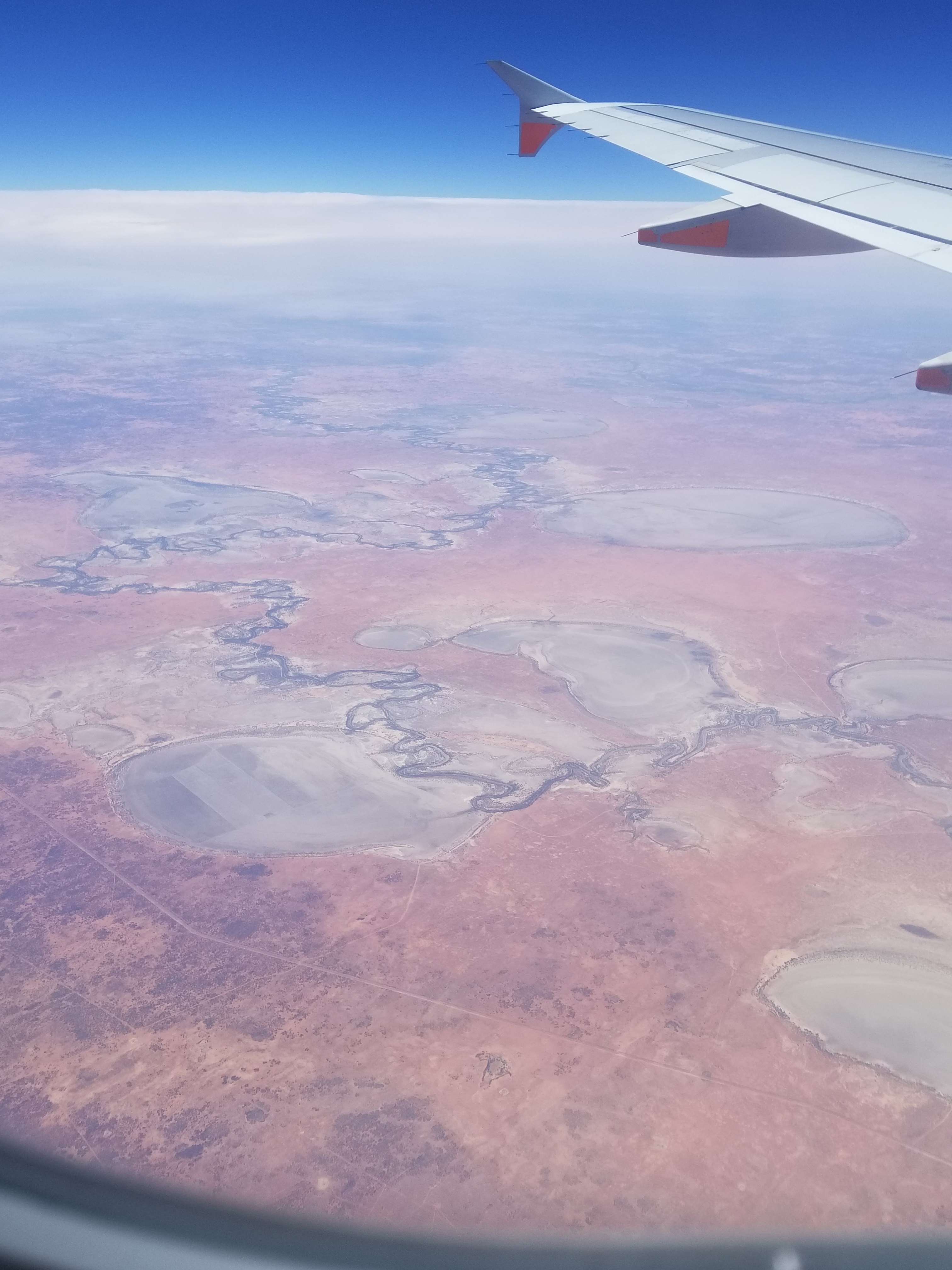
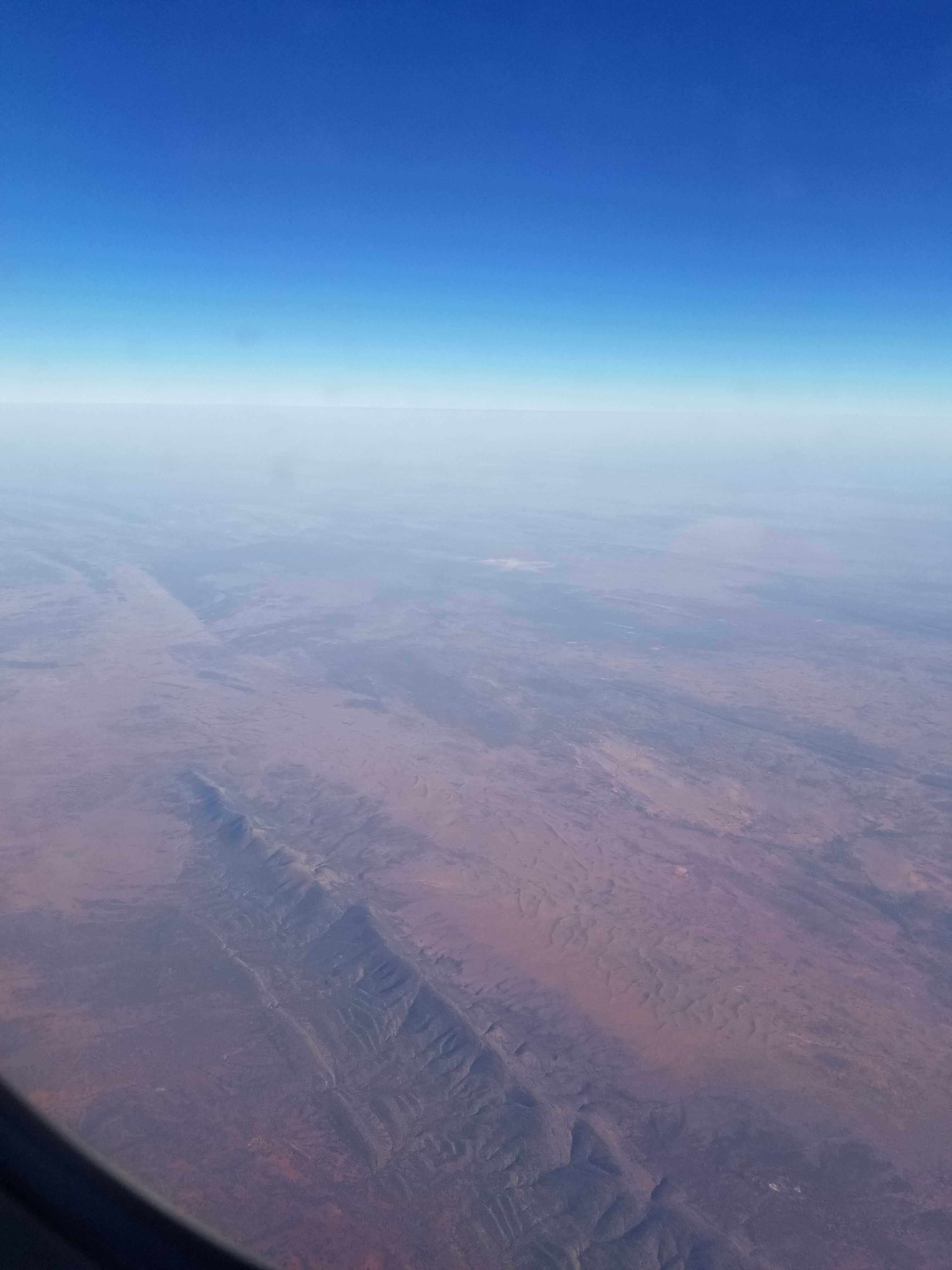
After a very early morning, we arrived in Yuluru, the town near Uluru and where our accommodations was located. There was some interesting landscape during our flight.
Enroute to the Red CentreSand Dunes in the Red Centre
We checked our luggage into storage as we could not access our room until after 3. While we waited for our tour bus, I took a walk to the resort’s mall and take some photos of the fauna.
Landscape around Yuluru
Upon boarding the tour bus, we were given our lunch and we then headed to Kata Tjuta (aka The Olgas). While not as large as Ulura, Kata Tjuta is more a collection of rocks. We went on a 1.5 self-guided hike into a valley. Upon returning to the tour bus, our guide informed us that it was 42c. No wonder I was sweating.
Kata TjutaWalpu Gorge Walk
There had been a fire near Kata Tjuta which really changed the look of the area. Whereever there was grass or shrubs, there were black marks amongst the orange ground. There is one tree which burns so hot that it leaves white marks.
Aftermath of a Fire
Our next stop was the Cultural Centre where there was displays about the local aboriginal stories which we were told during our drive and there were a couple of shops where the local aboriginals were doing paintings that were available for the public to purchase.
After our stop at the Cultural Centre is was onto Uluru and our first walk, the Multitjulu Waterhole. Because the area had 38mm of rain last month, there was actually water in the waterhole although it was evaporating about 1/2 inch every day.
Multitjulu Waterhole
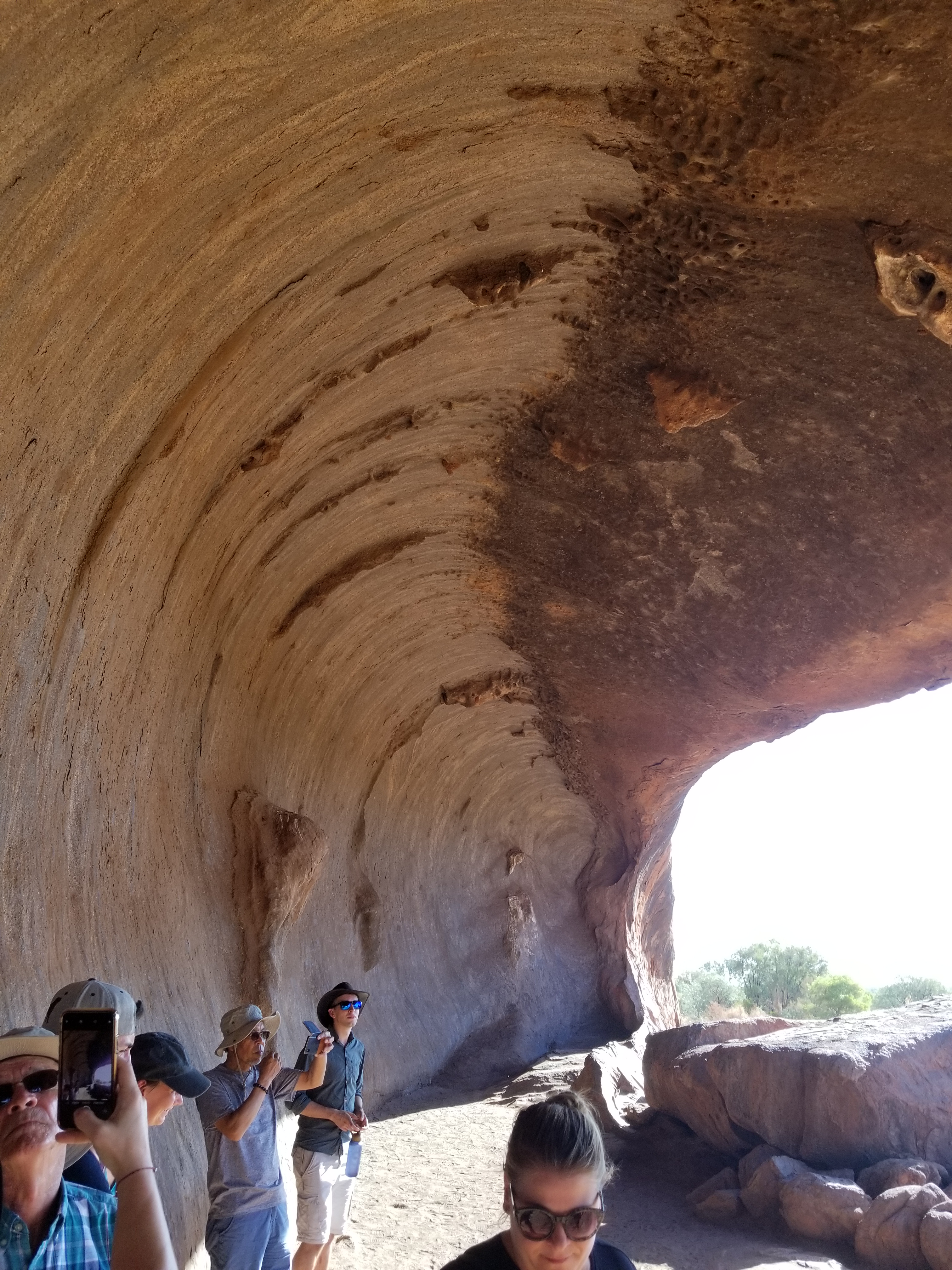
Our next walk was the Mala Walk where we saw a number of caves. Two of the caves were kitchen caves where women prepared food and taught their girls how to collect and prepare food. Aboriginal men did not enter this cave and continue to respect the area. The third cave was for men only where they taught boys the hunting and tool making skills they would need.
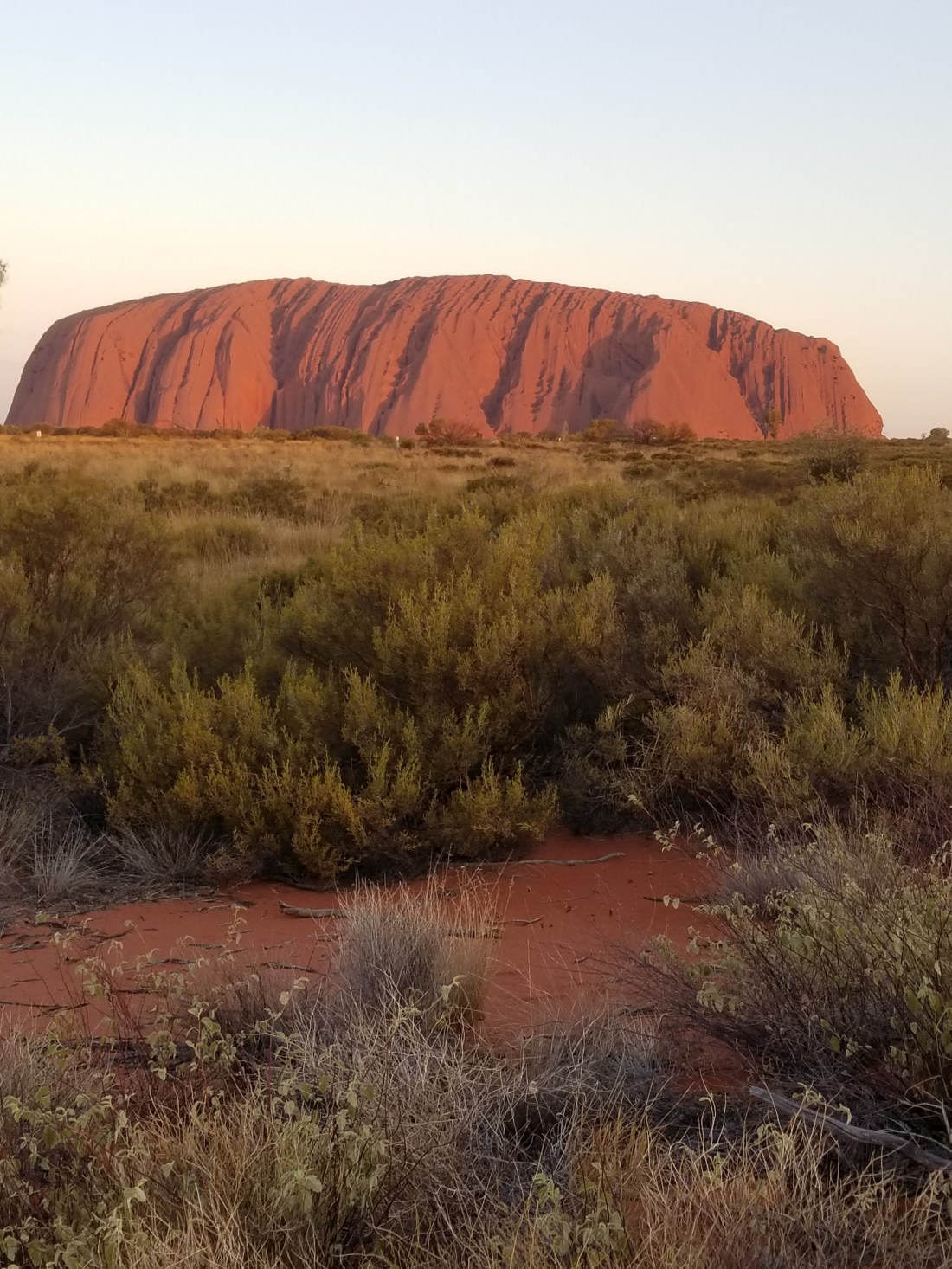
Our final stop for the day was to watch the sunset at Uluru while we enjoyed a BBQ meal of snags (aka sausages) and steak along with various salads, along with wine and other beverages. After the busy day in the sun, it was great to sit in the shade of the bus eating a wonderfully prepared meal which watching Uluru change colour as the sun set.
Uluru at SunsetSunset
Ten minutes after the sun set, it was back onto the bus to return to our accommodations to prepare for our Field of Light tour. At this point, I couldn’t wait to have a shower but needed to wait until after the next tour.
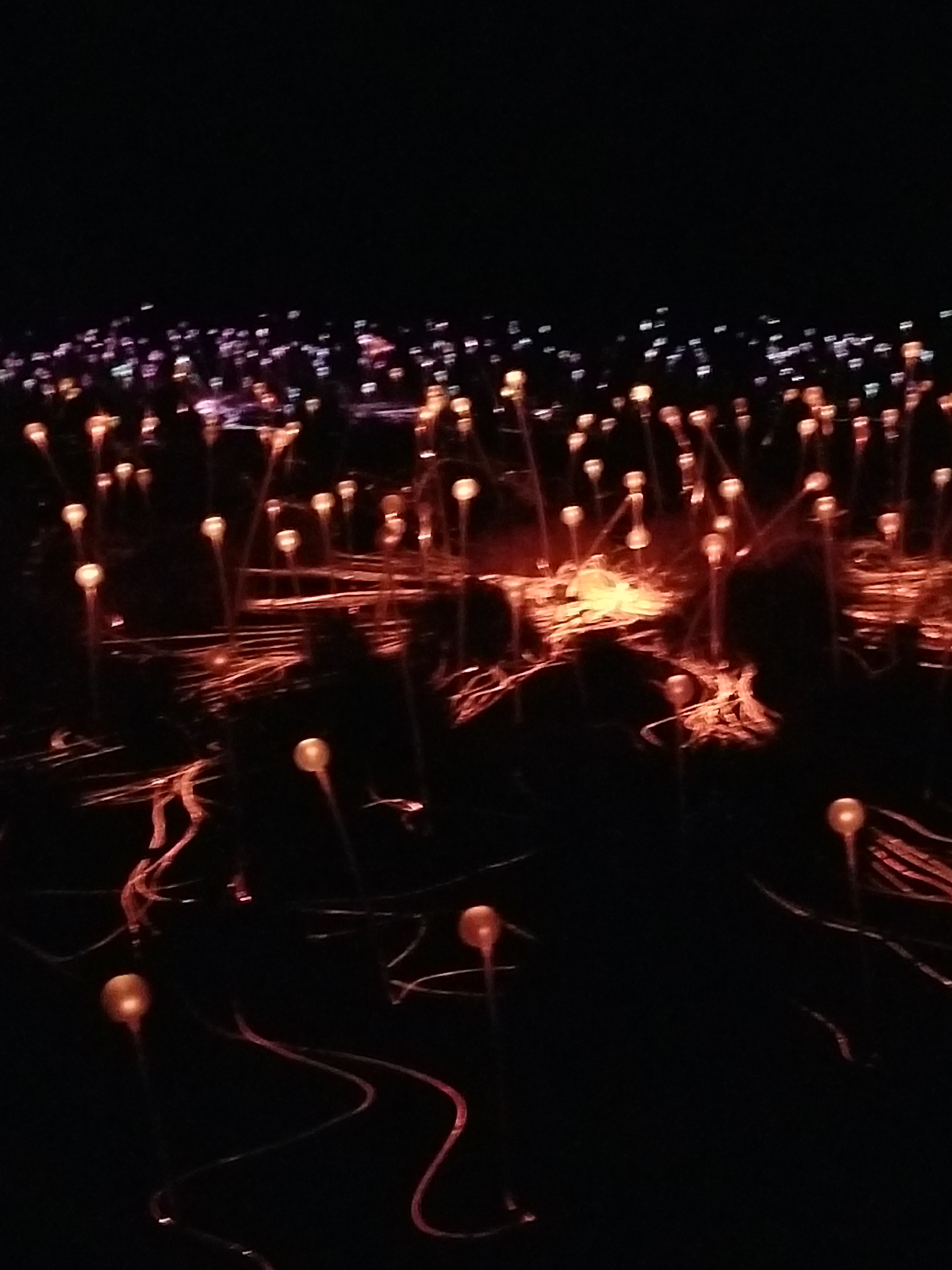
The Field of Light was interesting. The lights are solar powered and change color. The more interesting part was seeing the stars. The Milky Way was so bright and clear. The night sky is so different from at home with completely different constellations, including the Southern Cross. Unfortunately, there are not photos, just memories.
Field of LightField of Light
We took the last bus from the Field of Light at 10:20 p.m. and was in the shower before 11. No need to run the hot water because the cold water is bath tub warm. Regardless, it was still refreshing. Now for a well deserved rest as it has been a long day.
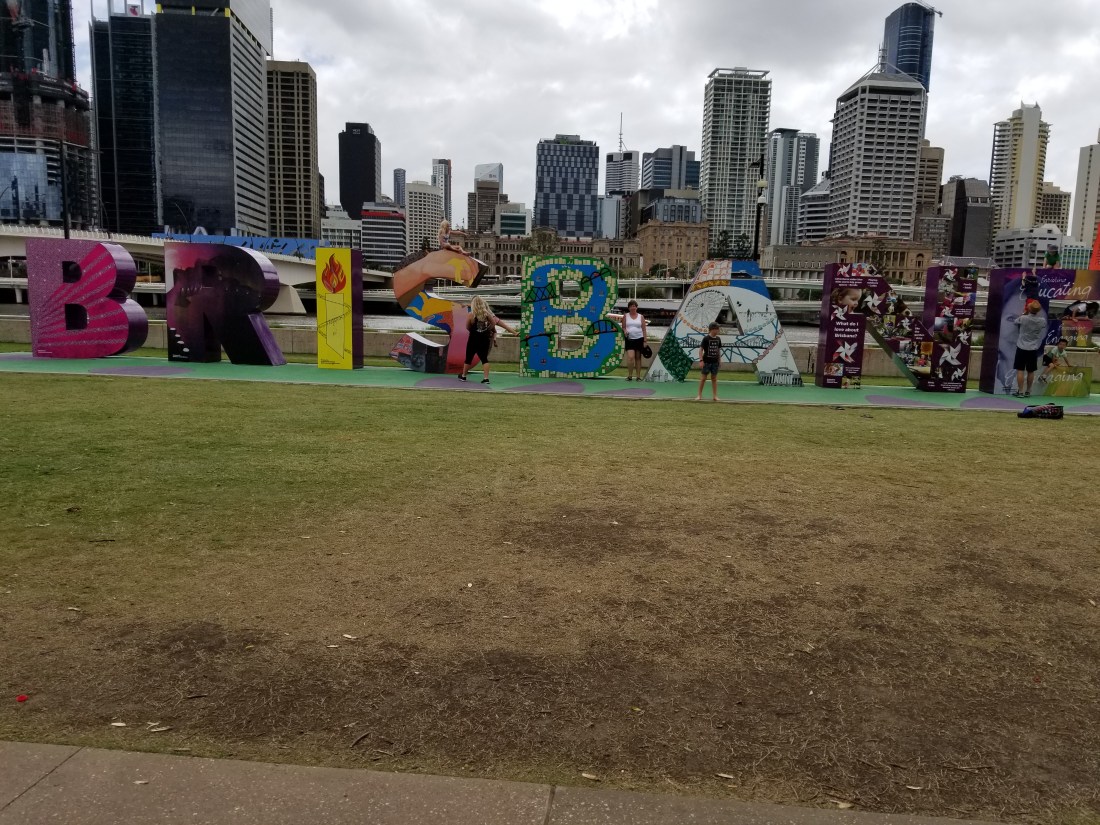
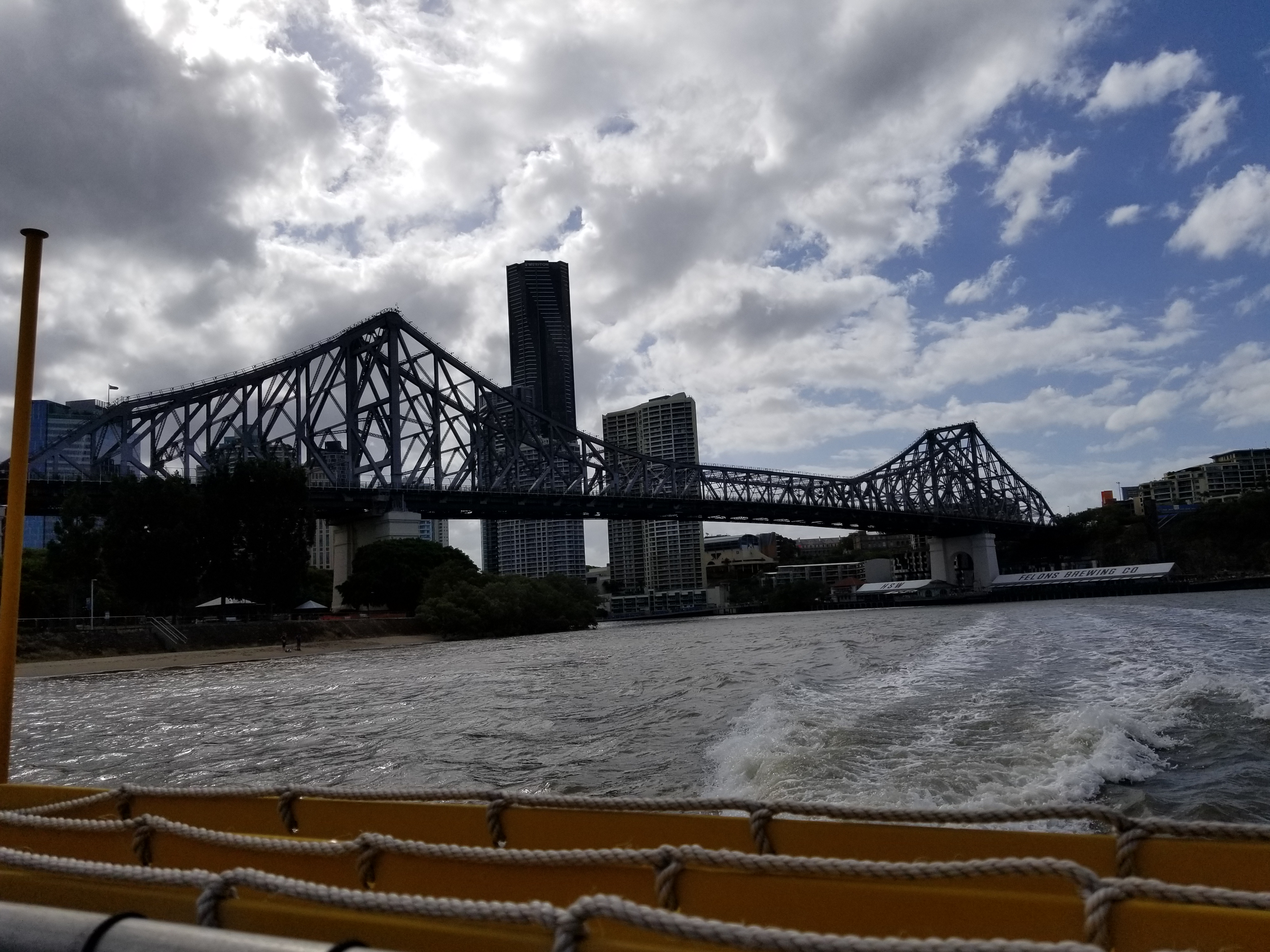
We spent a quiet day exploring Brisbane. There is a major river that runs through the city and there is a ferry system that runs along the river stopping at various points.
We spent time at the shopping centre and botanical gardens in the downtown area.
We made arrangements for a taxi to pick us up at 4 a.m. and then went for dinner before having a early night.
To break up the four hour drive back to Brisbane, we stopped at the Australia Zoo. While I don’t particularly like zoos, this zoo was established by Steve Irwin, the famed Australian conservation advocate who was killed by a string ray just off the Daintree Rainforest coast.
Interesting fact: Steve Irwin was celebrated by Google on February 22, 2019 which would have been Steve’s 57 birthay.
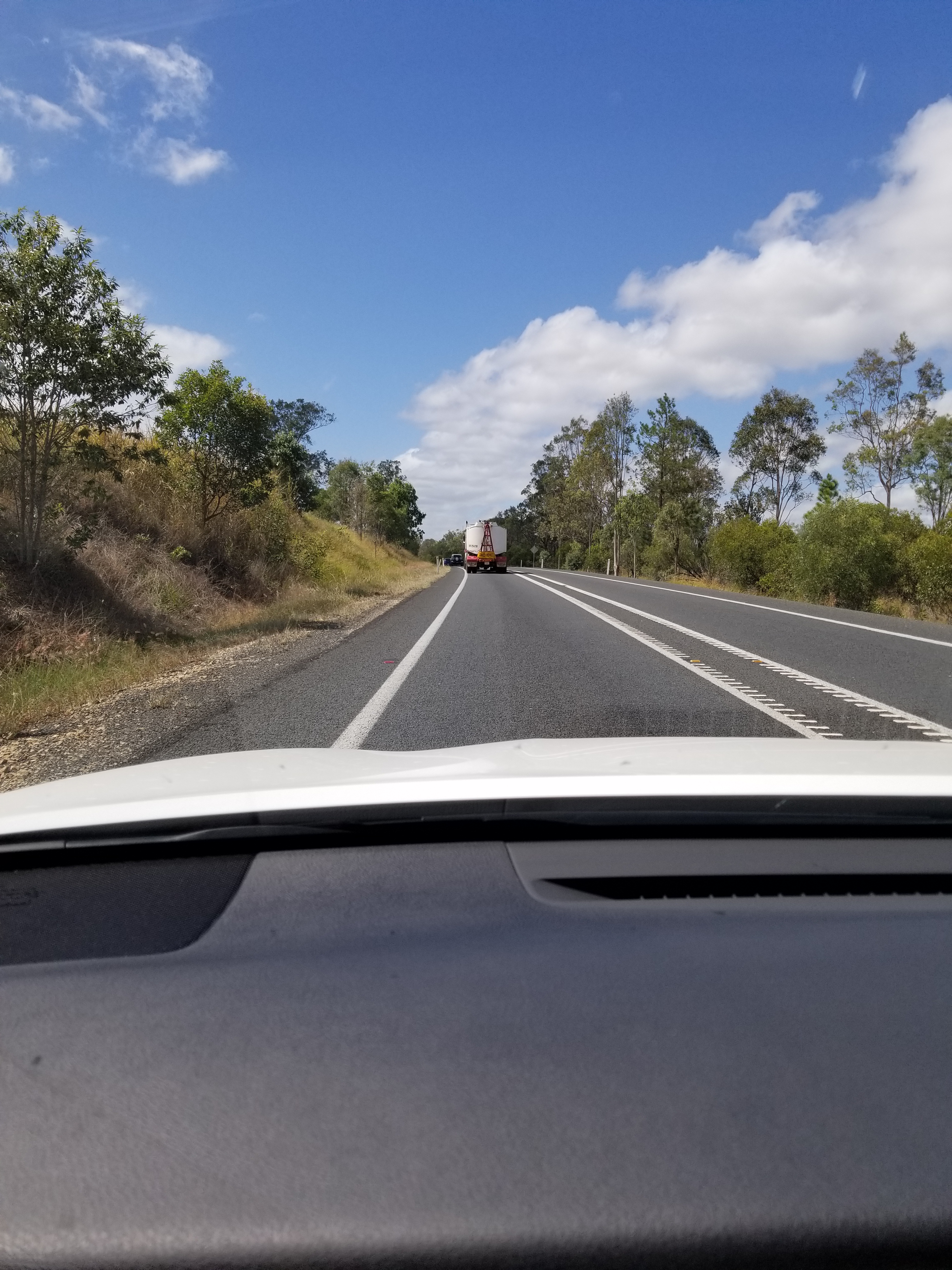
The major highway that runs along the east coast of Australia is the Bruce Highway. The highway around Brisbane was 2 to 3 lanes wide in each direction but as you get further from Brisbane, it becomes a single lane in each direction whith some wide-outs for passing purposes. What surprised me was that the highway was still single lane as it was 30 years ago.
Bruce HighwayCountryside near Maryborough
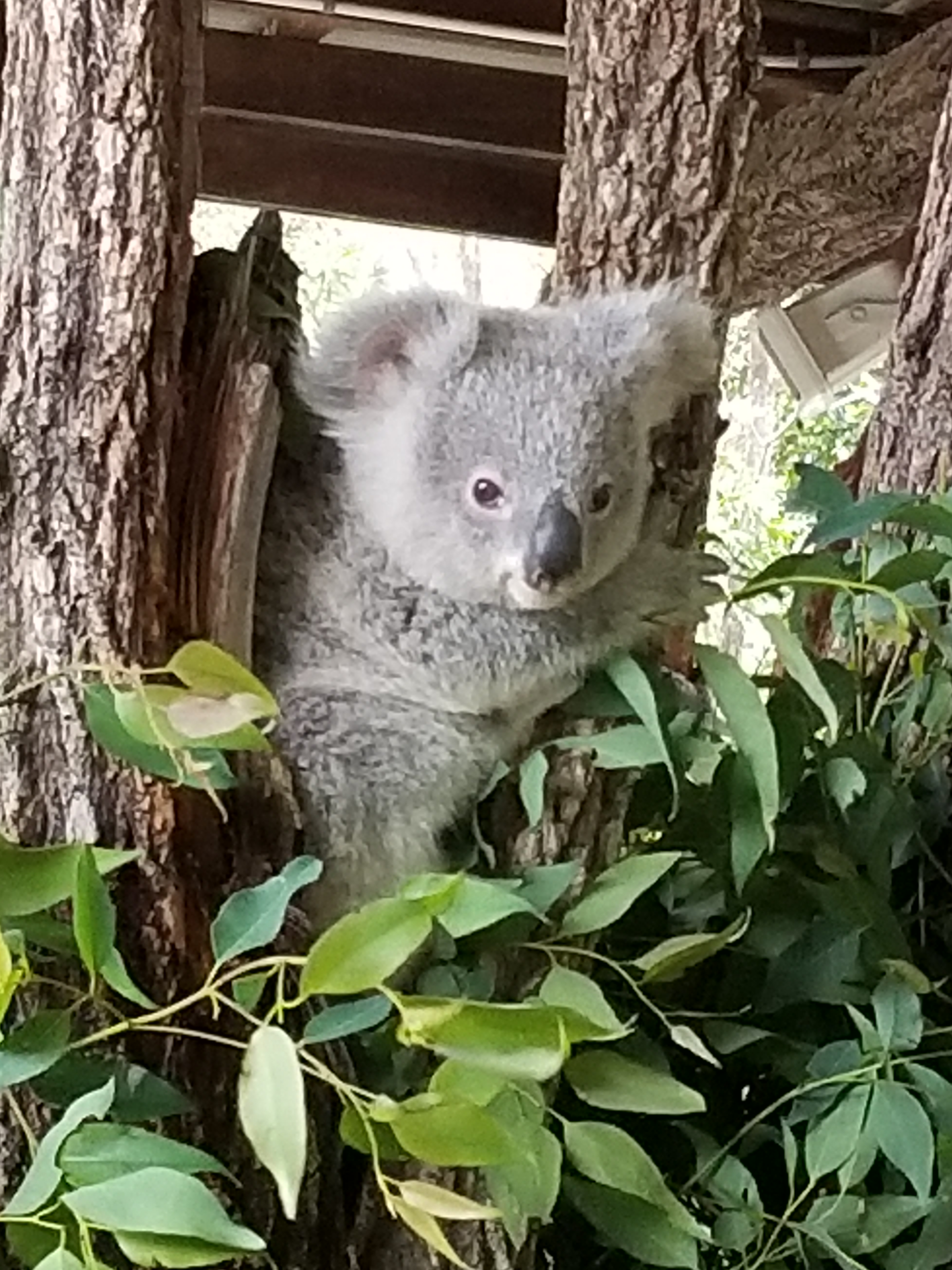
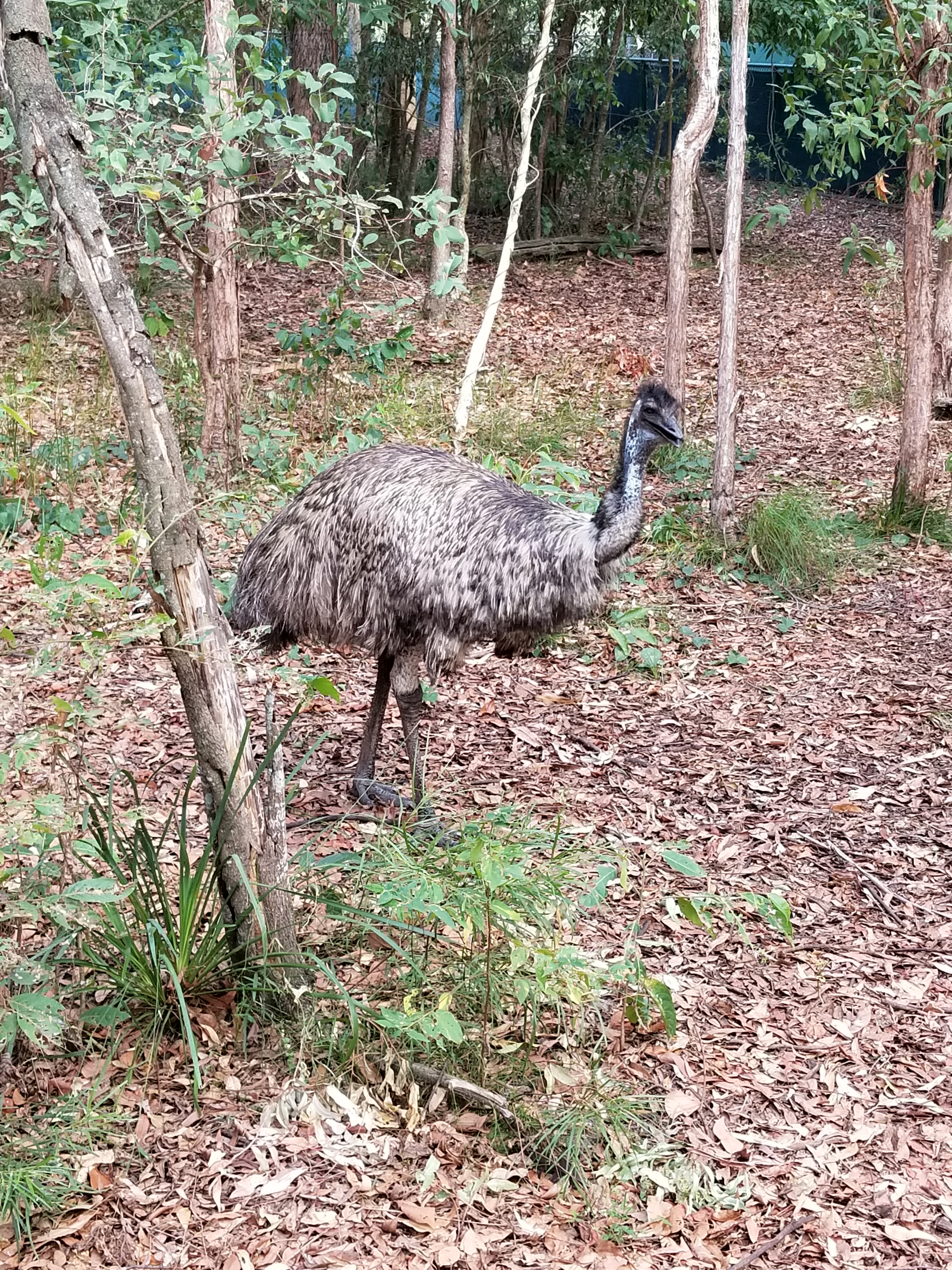
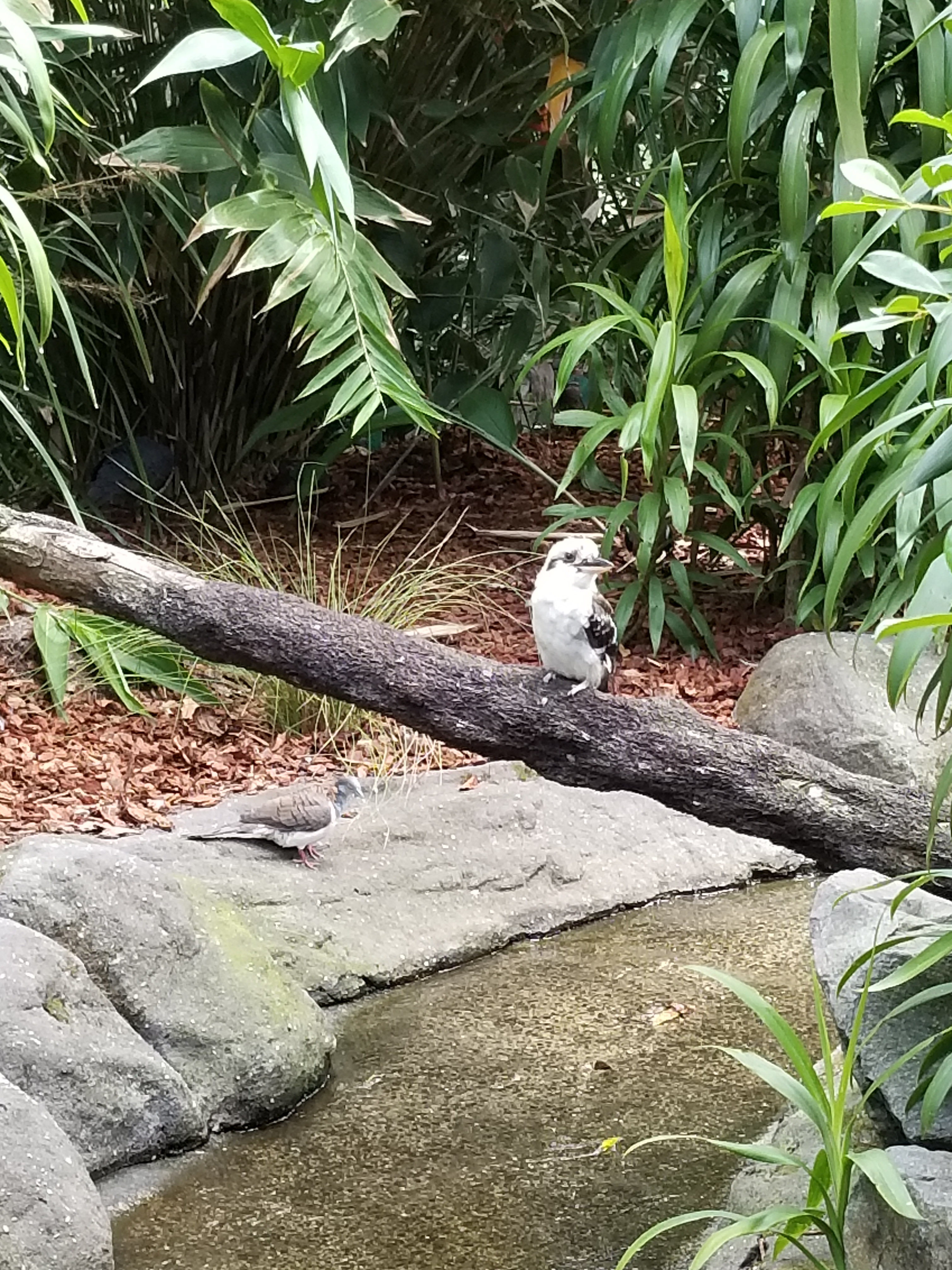
The Austrailia Zoo is home to mainly Austrailian animals but there are some animals from Africa. My interest was seeing Austrailian animals expecially ones I have not been able to see in the wild. The main focus for the zoo is crocodiles but they do have many other animals as the pictures below show.
Grey Kangaroo
Michael made plans to get together with an acquaintance in Brisbane who had purchased Michael’s books. We had a wonderful evening with Brett and his wife Judy who prepared a wonderful meal for us and another couple who is also interested in military history. Brett and Judy live in a home built in 1912 known as a Queenslander which is considered a historic building.
Today we visited our third UNESCO World Heritage site on this trip, namely Fraser Island.
We were picked up for our tour at 7:45 a.m. after a very noisy night. Cyclone Oma is just off shore and as a result, the winds have been very strong. The palm and other trees near the hotel were hitting the metal roof on the hotel making quite a racket. From Fraser Island down to the Queensland/New South Wales border are under a cyclone watch as well as a king tide warning. A king tide is a higher than normal high tide, typically due to high winds.
I was concerned that our tourwas going to be cancelled due to the high winds but the one hour ferry ride from the mainland to Fraser Island went well as it was on the sheltered side of the island.
Fraser Island became an UNESCO site in 1992 after the UN visited the site in 1991 but held off because logging was still being done on the island. The logging company agreed to leave, the UN named the island a world heritage site within months. The island is unique for the following reasons.
The island is 100% sand
The island is home to 40 perch lakes. There are only 80 in the the entire world.
The island sustains a rain forest.
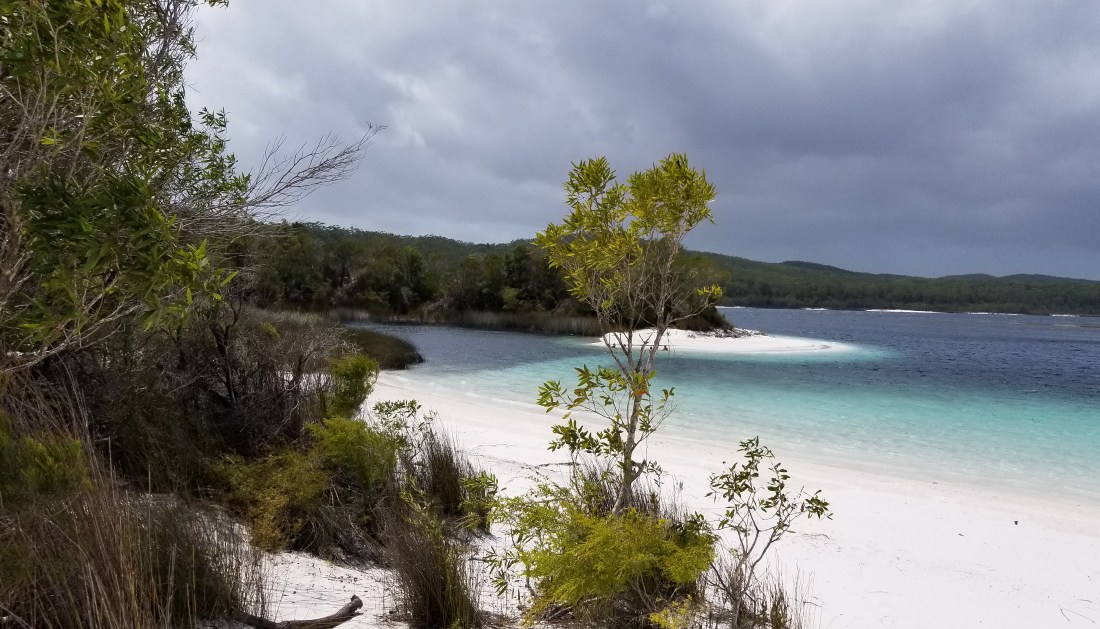
After arriving on the island, we headed to Lake Mackenzie, one of the largest and accessible perch lakes. A perch lake is a lake that has is no feeds from nor feeds any other water sources. The only source of water is from rain. Over hundreds of years, the debris from the surrounding trees fell into a hollow created from the blowing sands which made a lining to trap the water. The sands around the lake are baby powder soft and absolutely white as it 100% silica/white quartz. Due to the warm weather, the water in the shallows was bathtub warm.
Lake MackenzieLake Mackenzie
We then went for a walk at the former logging campsite and the rainforest. We were reminded to be on the lookout for dingos as the island is home to about 150. They can be quite vicious so there are lots of signs warning people to be careful.
While at the logging camp/rainforest walk, one of the other tour buses got stuck and our bus was asked to rescue them. Our next stop was a buffet lunch at Eurong where there is a resort. Due to the winds, a tree had fallen across the road and as the roads are a single lane, our progress was stopped until it was removed.
Fraser Island is about 123 kms long and on the eastern shore, you can drive the entire length on the shore. There are actually road signs as it is considered a road. At the start of the day, the tour guide/driver was concerned that we would not be able to see the sights on the eastern shore due to the extreme tides. High tide was in the mid-morning so our guide hoped thigs would be a go after lunch.
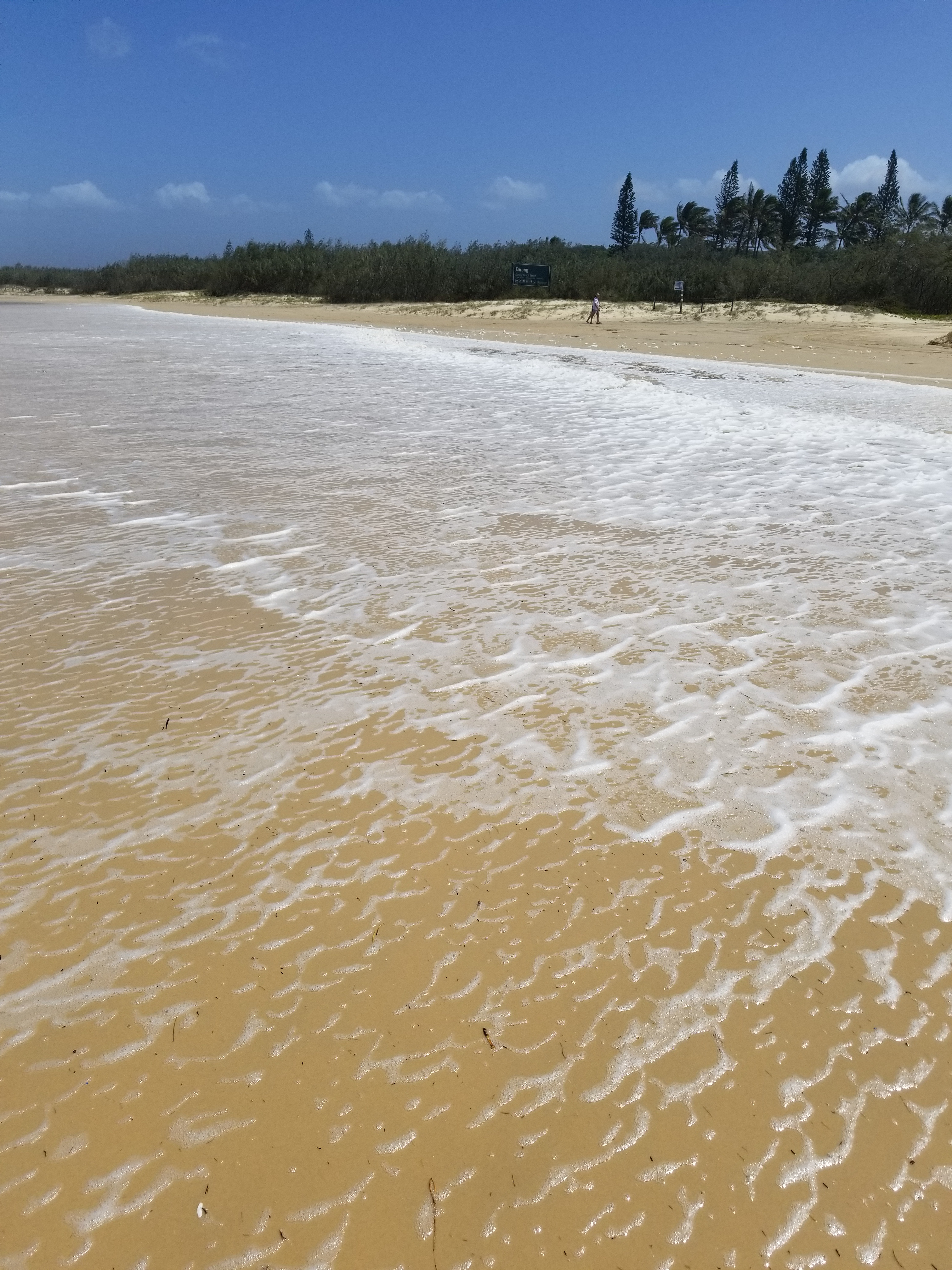
After lunch and before we resumed the tour, I took a walk down to the beach. The wind was still very strong causing me to be pelted with sand. The water was just wave upon wave which created a lot of foam which was also blown across the sand.
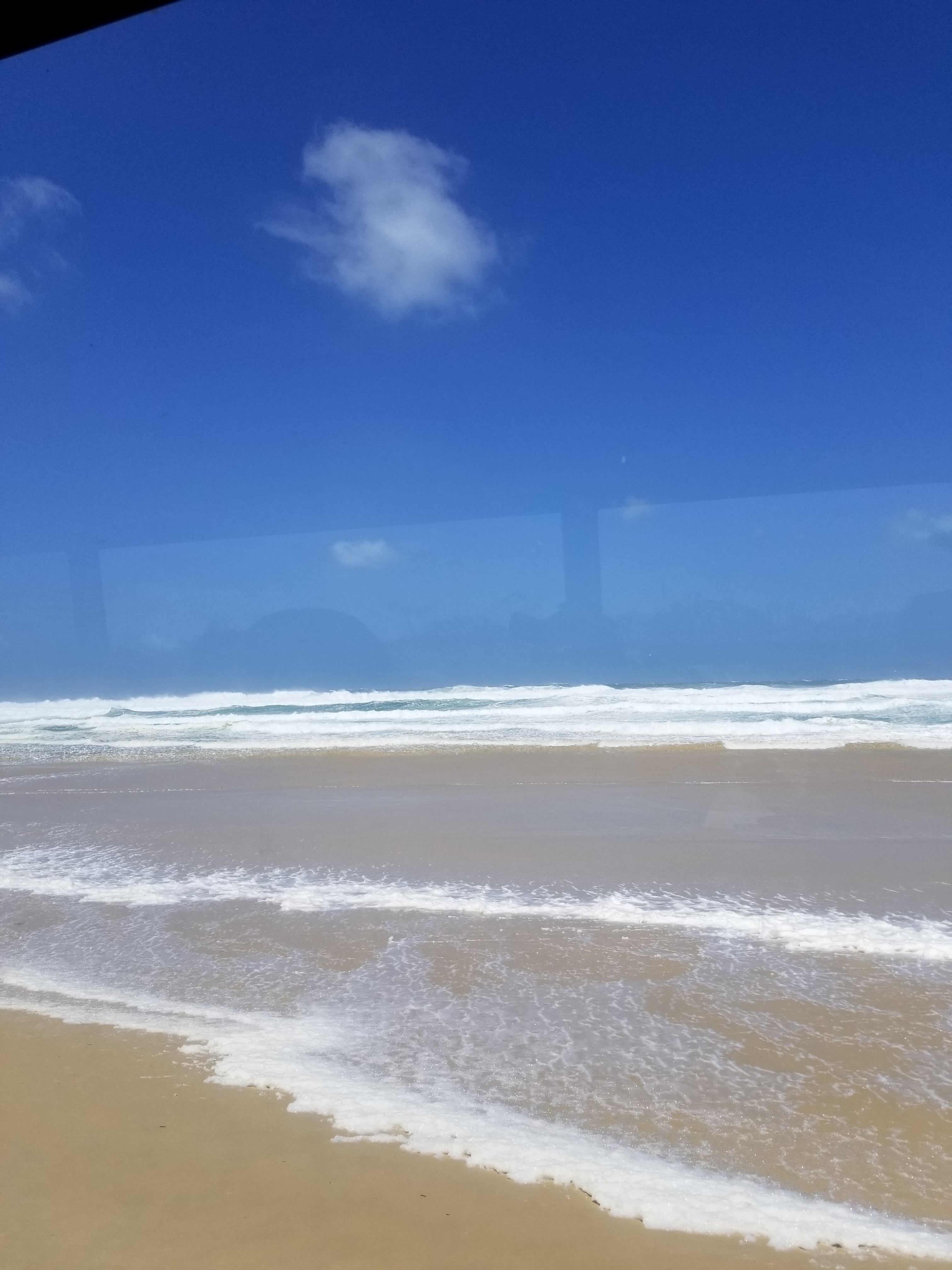
Sea Foam on the BeachStormy Seas
As we continued our tour down the the eastern shore, the tour guide, who has been doing this tour for 13+ years, commented that he has never seen the waves as high as today. He estimated the waves were 9 metres high.
We saw a dingo in the dunes but we could not stop for a photo as the water was so coming so high onto the beach and it made the sand soft which could cause the bus to get stuck. We were sitting on the opposite of the bus so I wasn’t able to get a photo.
Our next stop was the remains of a shipwreck. The ship was built in the early 1900’s and was used during the First World War as a hospital ship. In the 1930’s, it was being towed to Japan who was going to salvage the iron as there was a world shortage.
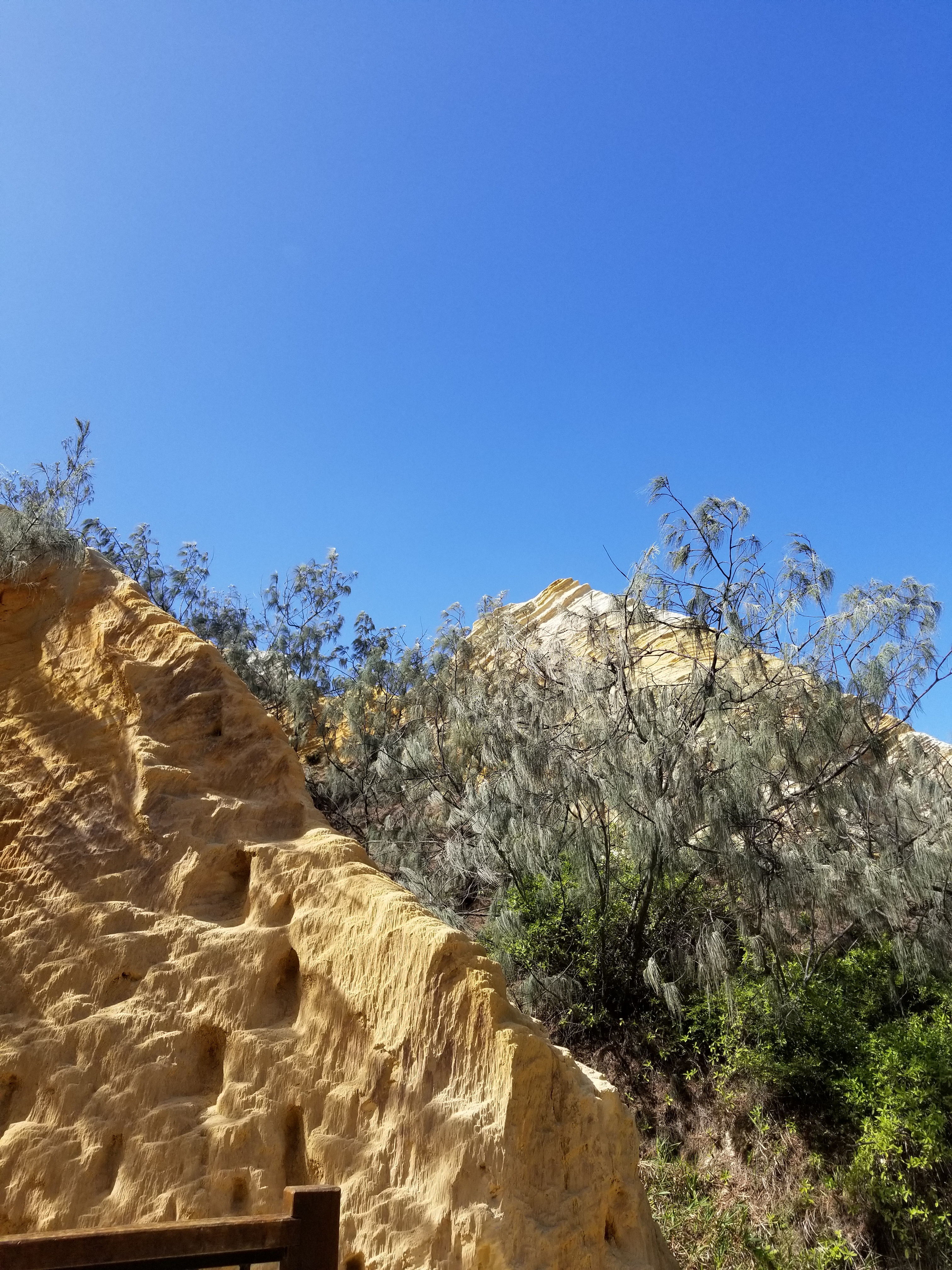
Our next step was the Pinnacles, an area that shows the different coloured sand found on the island. Basically, new sand is a cream colour that covers the white silica/granite. The cream colour erodes away leaves the white sand.
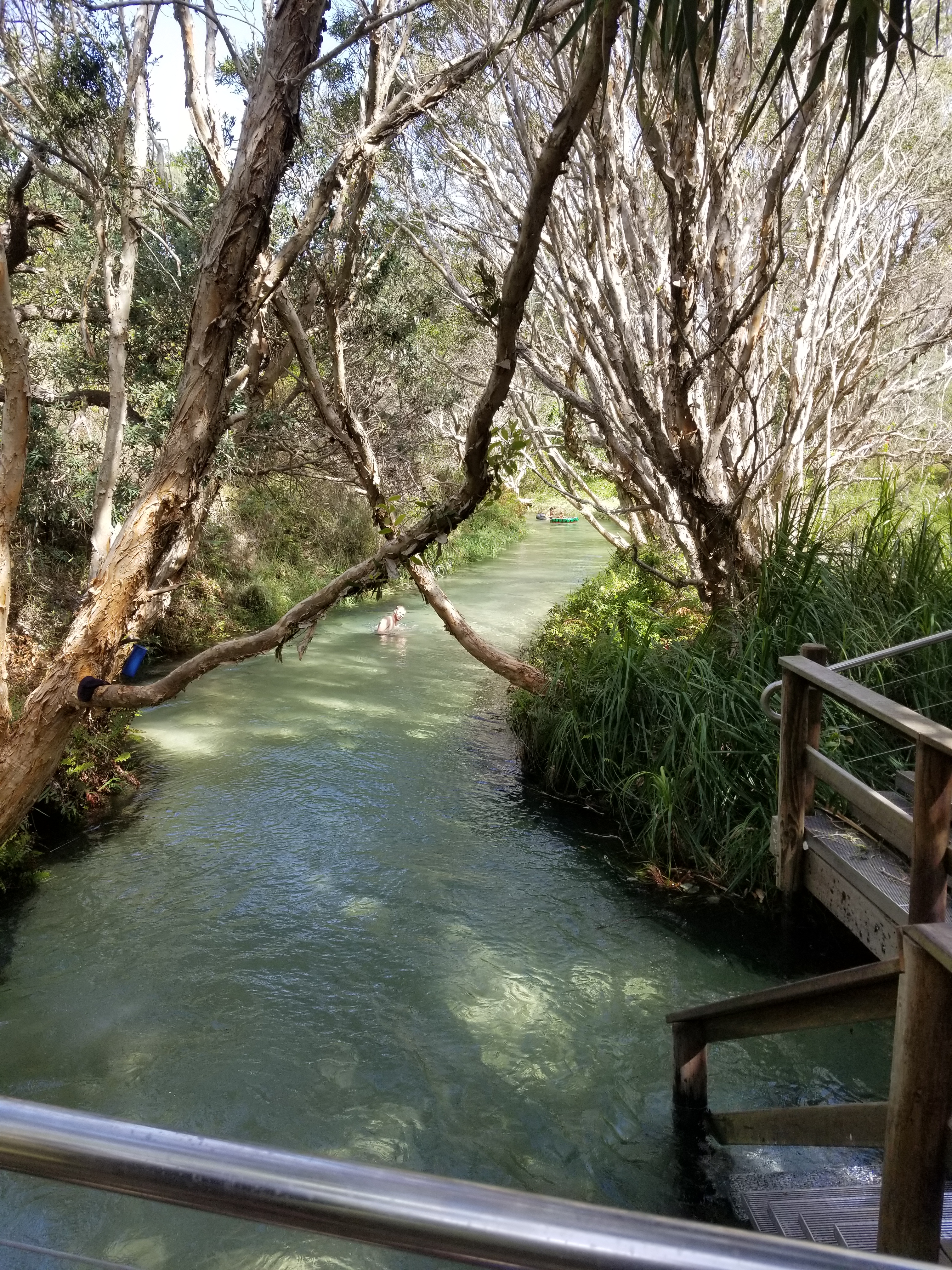
Our last stop was Eli Creek where you can inner tube down the creek to the ocean. Earlier in the day, our guide told us that the water in the creeks are fresh water that is comes out of the sands and the water in the creeks are from rains that fell about 150 years ago that finally worked its way to the surface.
Eli Creek
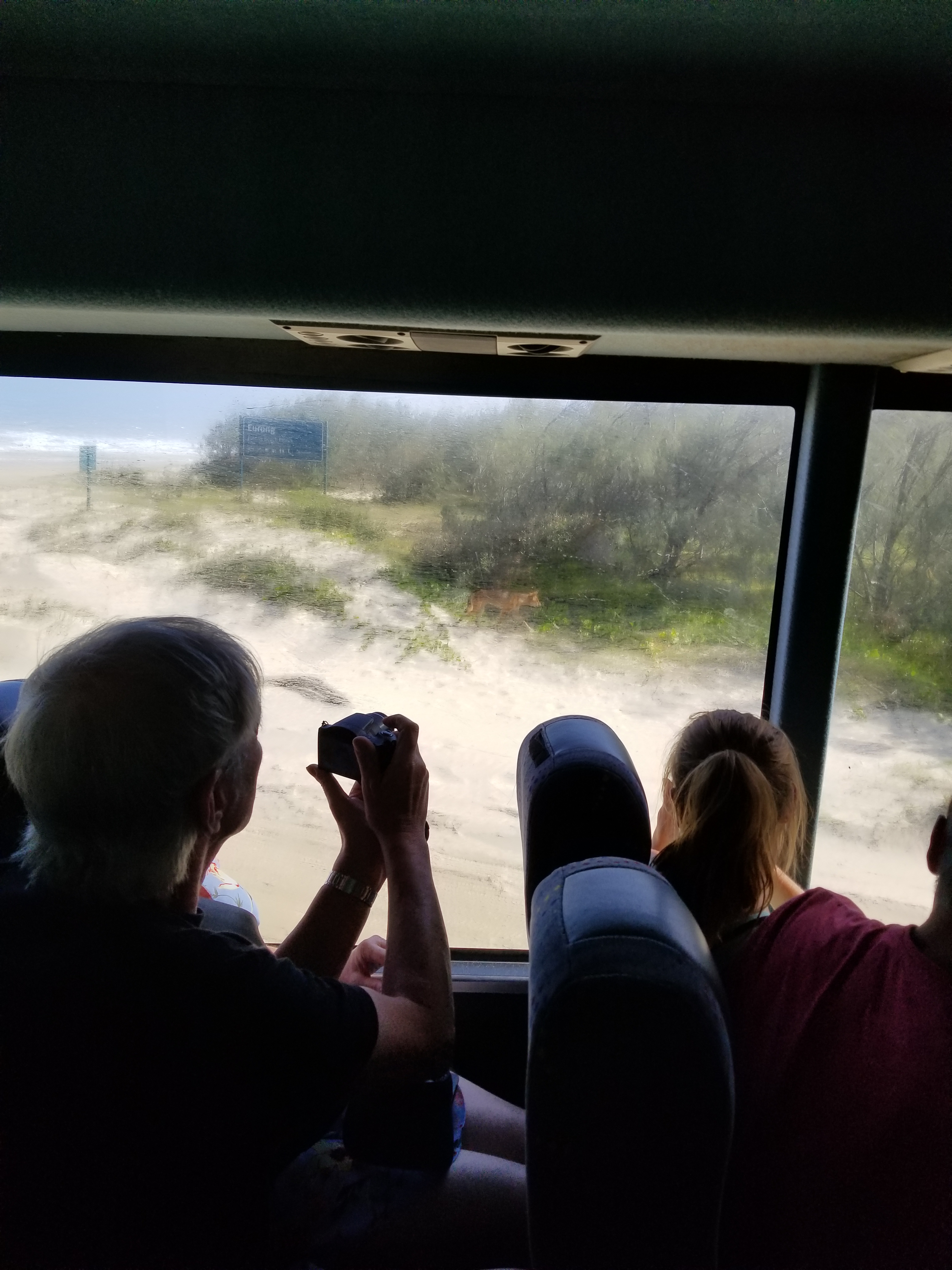
On our return trip, I kept on the lookout to see a dingo and had given up hope as we approached the Eurong Resort when there were two dingos in the entrance way. Again I was on the opposite side of the bus but was able to get a photo of one of the dingos.
Fraser Island Dingo
The ferry to the mainland left at 5:00 p.m. so our tour needed to end.
After tidying our accommodations, we caught the bus to connect to the the airport shuttle. We arrived in Brisbane, collected our car rental and headed to Hervey Bay, arriving at 9:45 p.m.
While flying to Brisbane, we flew over sections of the Great Barrier Reef as well as over Townsville where the rivers in the area are still flooding over their banks.
Since we spent most of our day in transit, today’s blog will be about interesting items.
There are 2 major food chains in Australia – Coles and Woolworth aka Woolies. In larger urban areas, you can also find Aldi
There are 3 major department stores – K Mart, Target and Myer.
There was a community garden across from our accommodation in Cairns. I didn’t recognize any vegetables within the garden like tomatoes, cucumbers, beans, carrots yet I have seen the seeds for these items in the store.
Brisbane has had 44 days where the day time high was 30c or higher.
Today we took a tour which included going down the Daintree River to look for crocodiles, a walk through a tropical rainforest, and some beach time at Cape Tribulation.
Enroute to our first stop, we saw lots of sugar cane fields and wallabies.
Wallabies
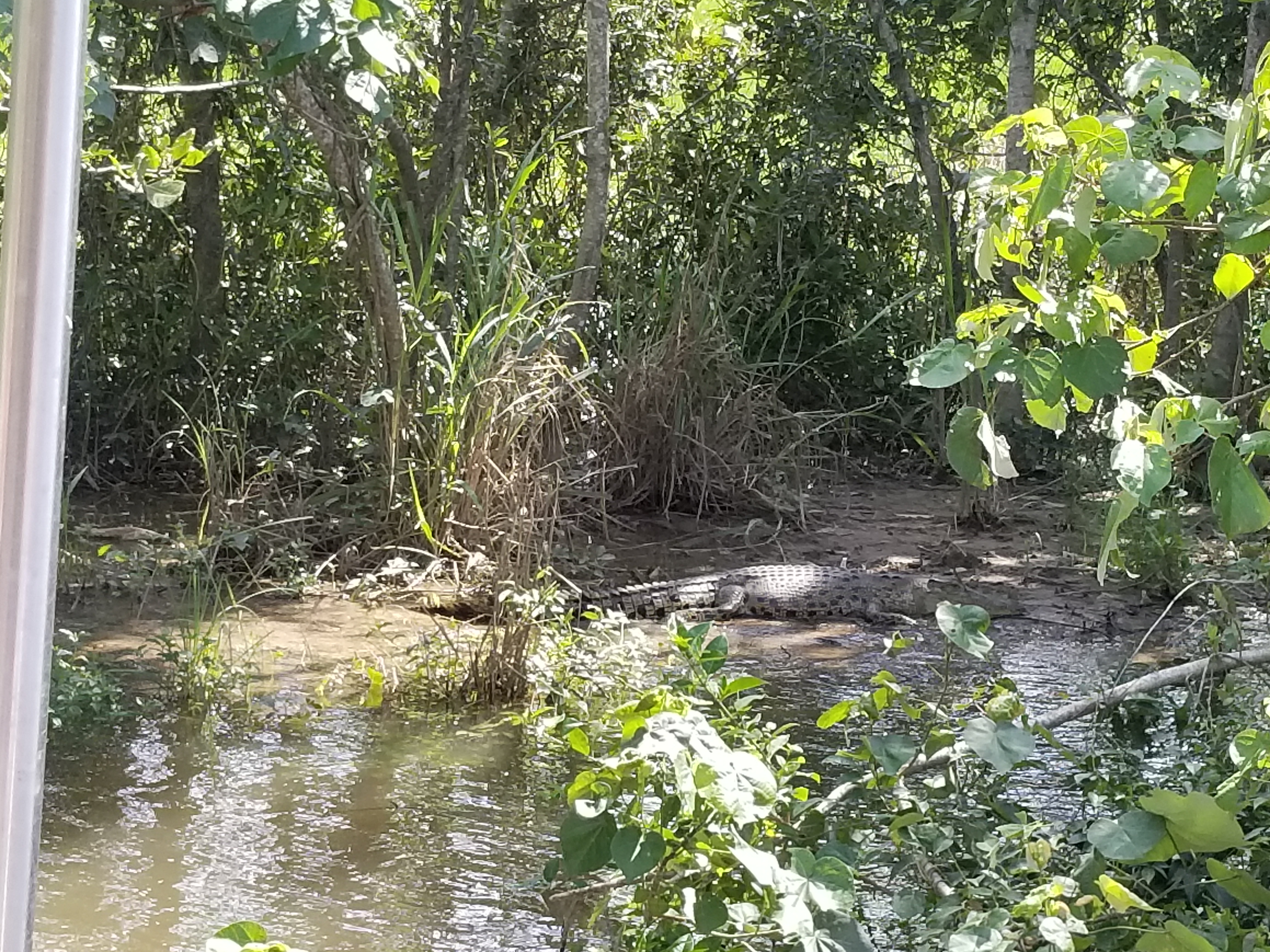
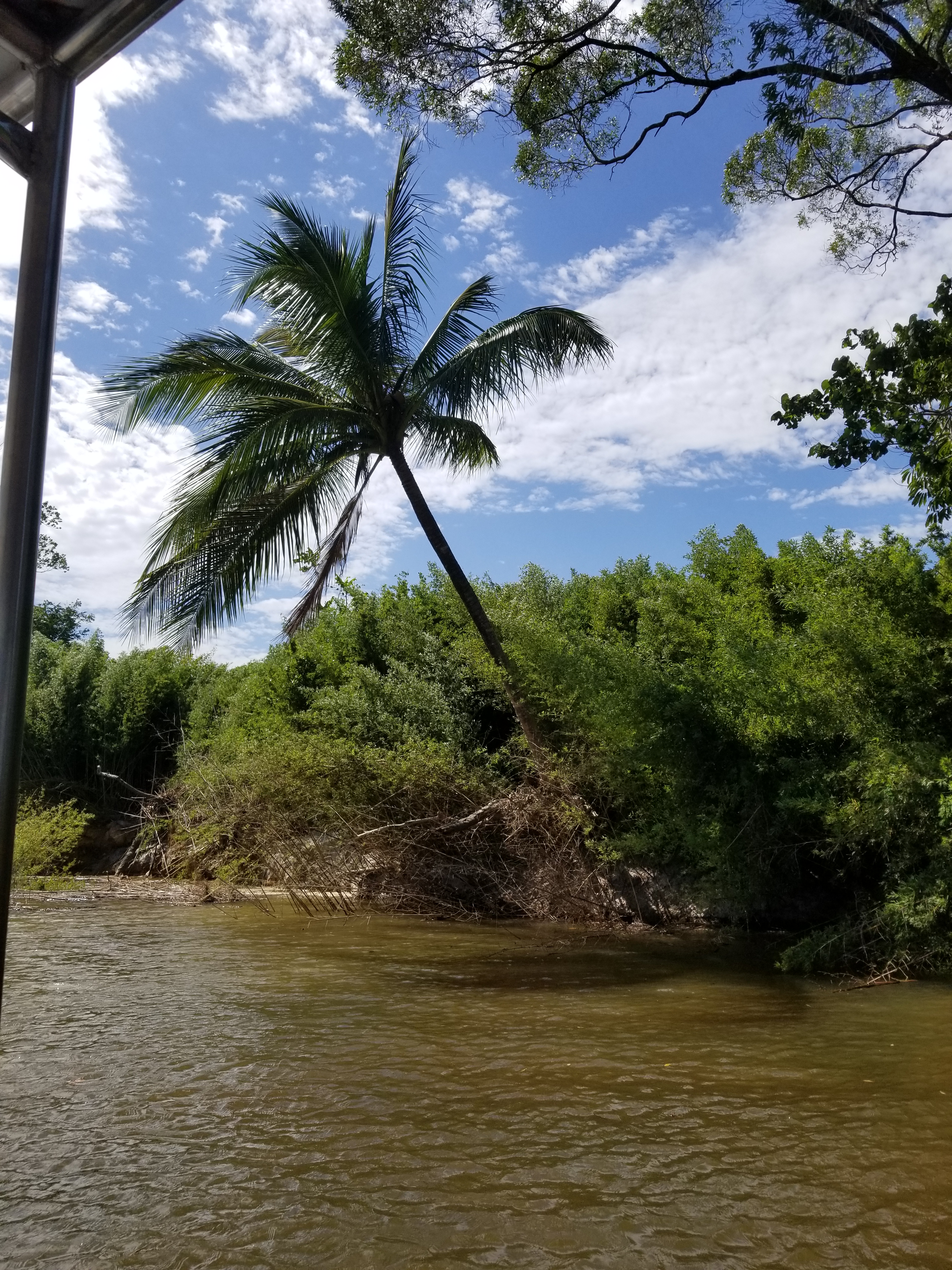
Due to significant flooding on the Daintree River in late January, supposedly the highest the river has flooded in 116 years, there was a lot of debris in the trees and mangroves. As a result of the flood, there were very few birds which is common after this area floods. In addition to looking for salt water crocodiles, we were also on the watch for water snakes and pythons who hang around in the trees. We saw a 2 to 3 metre long crocodile and some saw a young crocodile sunning himself on a log.
Salt Water Crocodile
Interesting fact – the Daintree River drains into the ocean. When the tide comes in the river is salt water. During low tide, the water in the river reverts to fresh water.
Shoreline on the Daintree River
Our next stop was a guided walk in the rainforest and our quest to find the cassowary. It is a flightless bird that grows up to 2 metres tall. It can be quite vicious if it feels threats by doing karate-like kicks to cut you with its sharp claw on its foot. The anticipated temperature in the area was 39c and in the rainforest, it was stiffling with the humidity.
The Daintree Rainforest is considered one of the oldest on the planet. One of the plants we saw only grows 1 cm per year and was about 4 metres tall making it over 400 years old.
400 Year Old Cynad
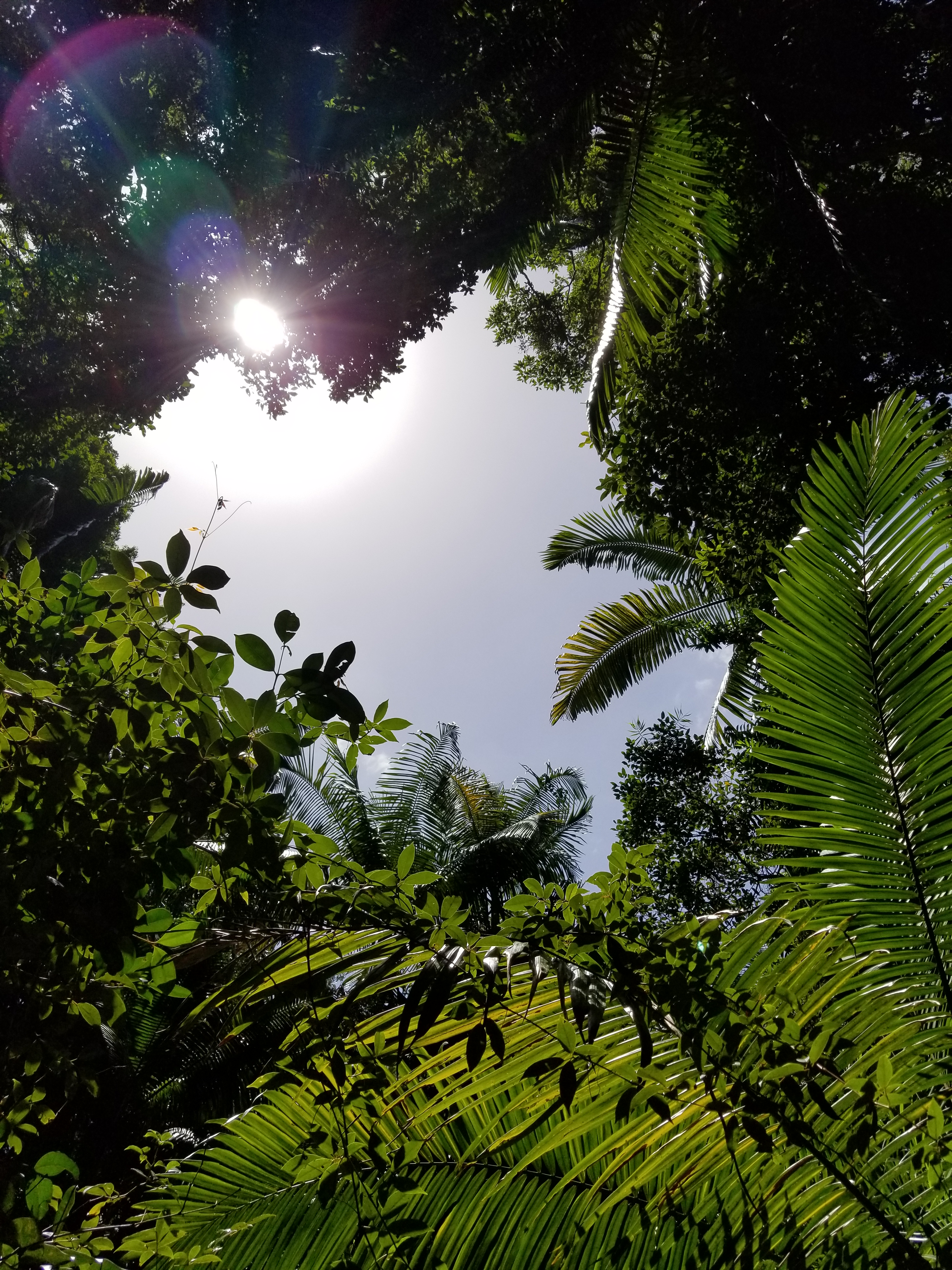
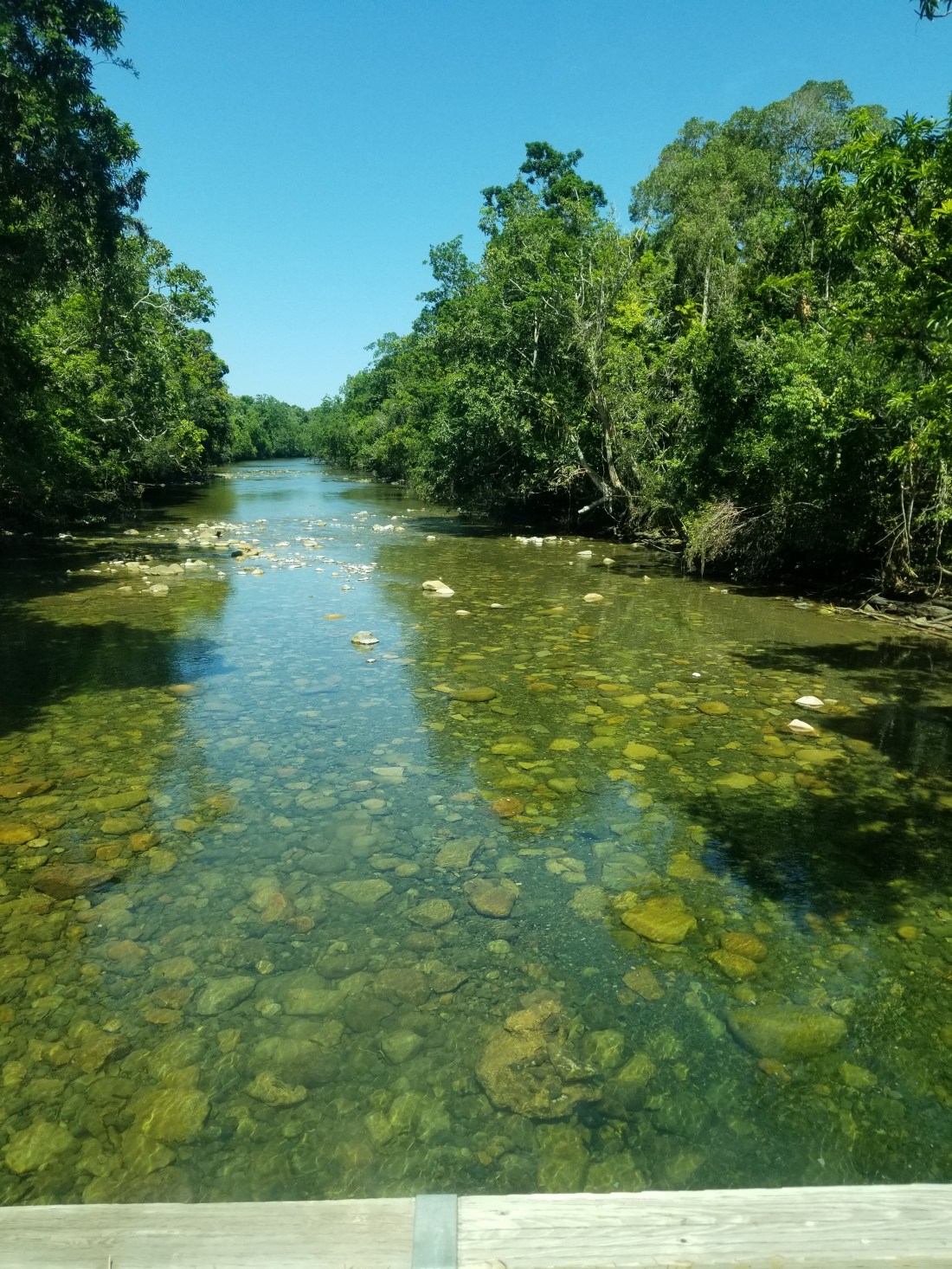
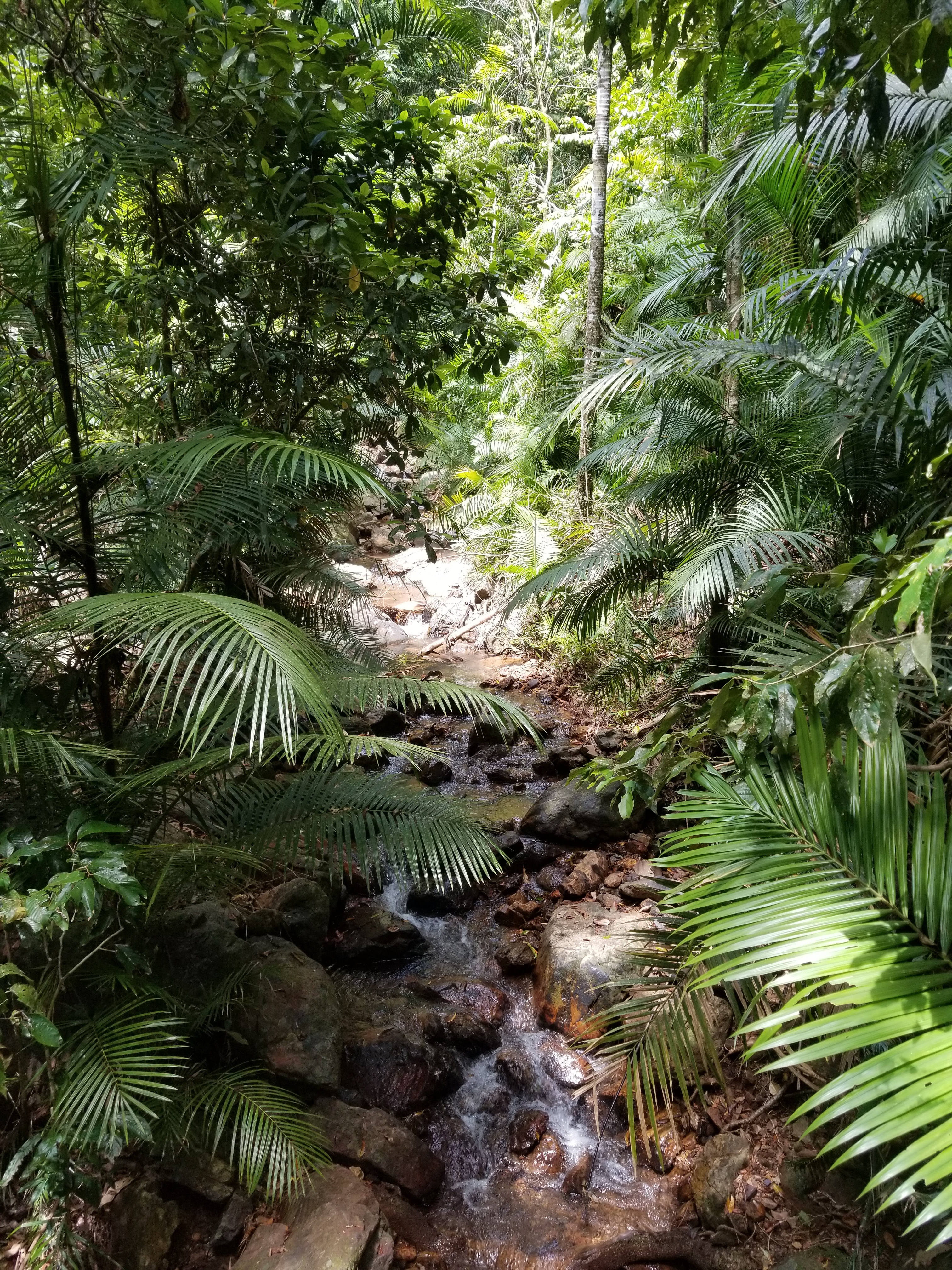
Here are some other photos taken during the walk in the rainforest.
Creek in the RainforestRainforest
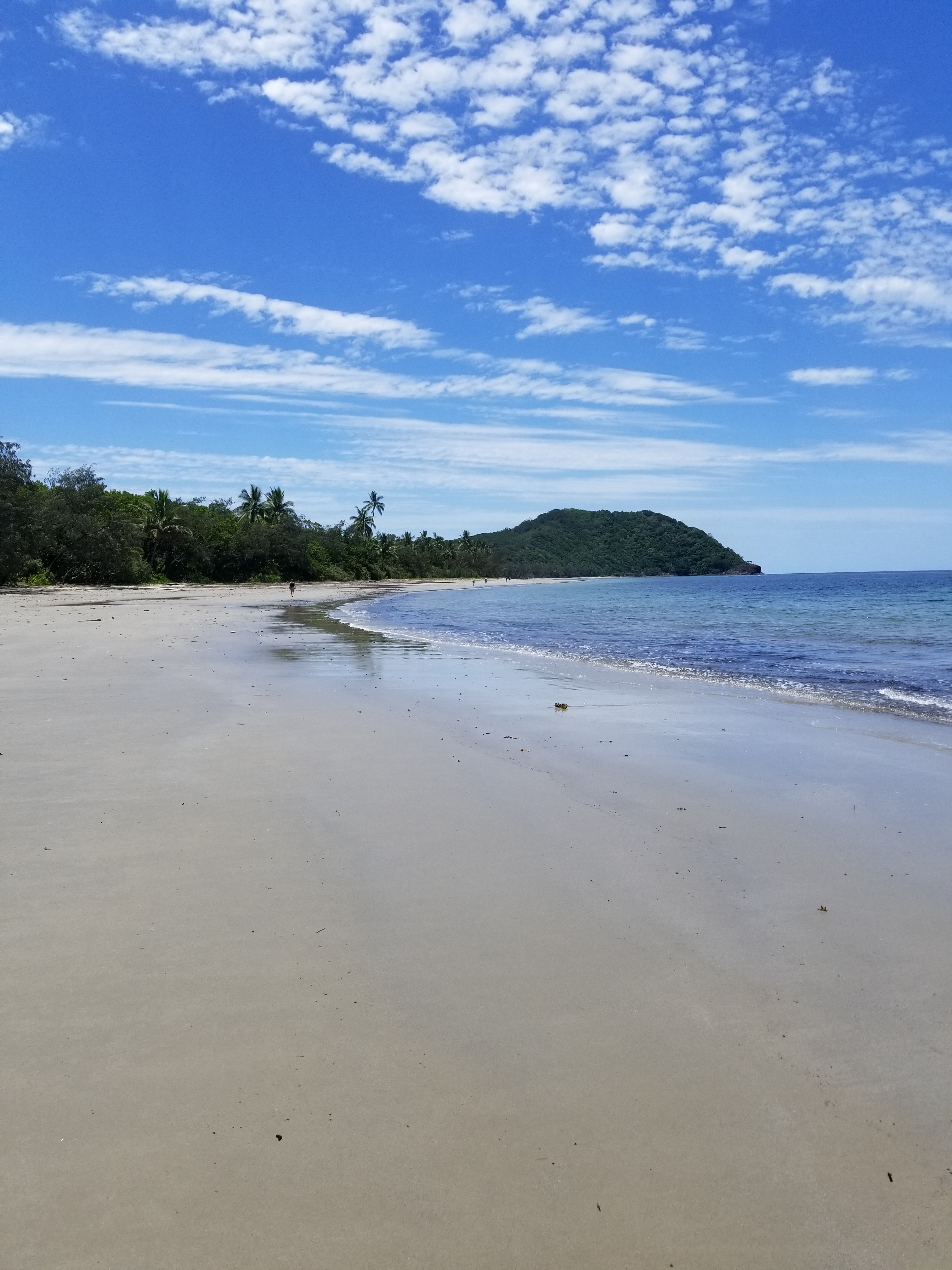
We then made our way to Cape Tribulation named by Captain James Cook in June 1770 after his ship, the Endeavour, decided to go through the Great Barrier Reef during a full moon and got grounded on the reef. The ship needed to be repaired and while this was underway, Captain Cook named the cape due to his trials and tribulations.
Cape Tribulation
We had lunch while at Cape Tribulation where we informed to keep a look out for a salt water crocodile who has been in the area as well as mantra ray and sea turtles. We were also told not to go into the water due to stingers which seemed to be quite prevelent in the area as per the signs.
Stinger Sign at Holloway Beach
At Cape Tribulation is the one place on earth where, by standing with one foot on the beach and one in the water, you are standing in two UNESCO sites, the Great Barrier Reef and the Daintree Rainforest.
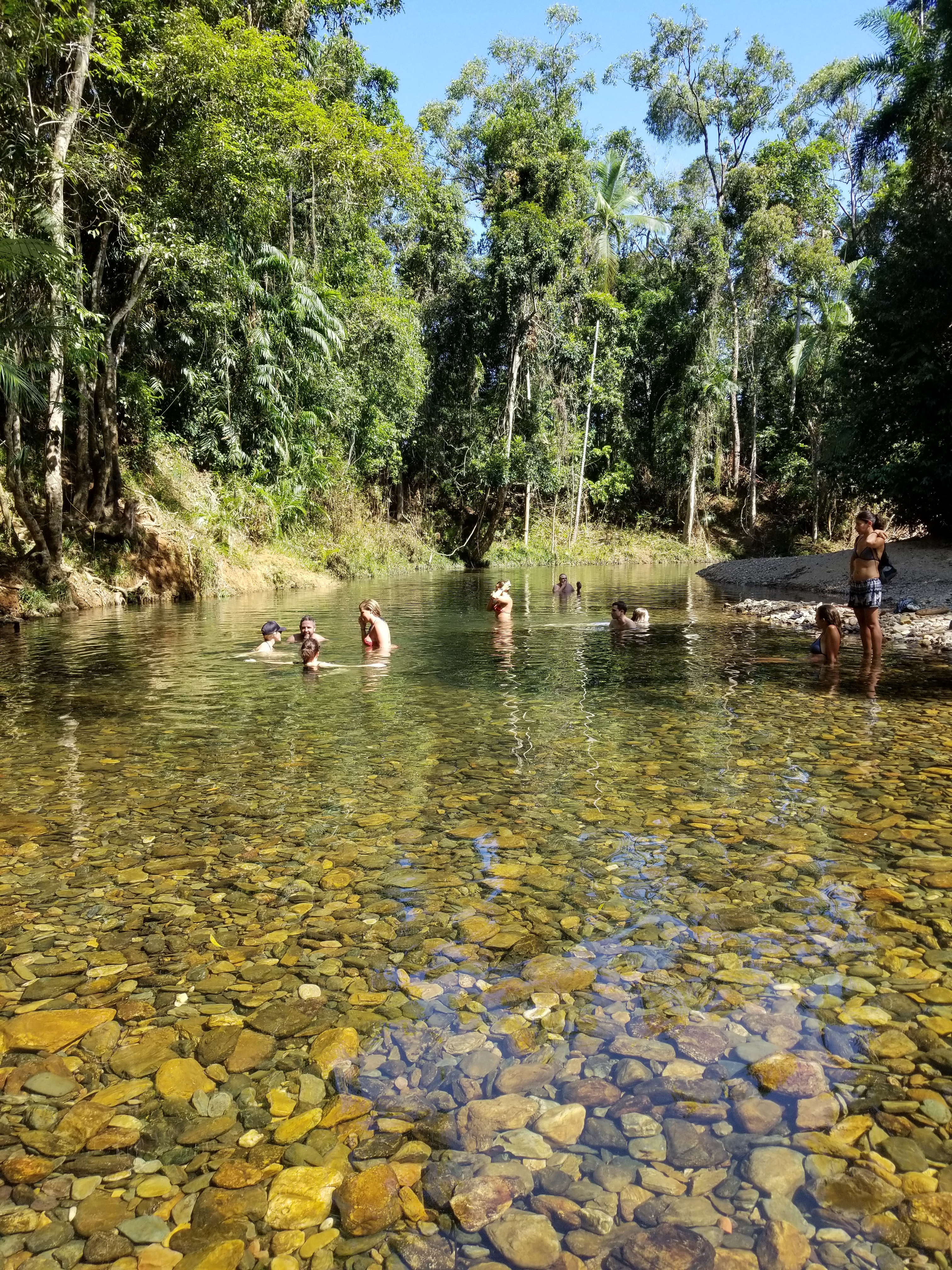
On our return trip, we stopped for ice cream locally made with fruit grown in the orchard that surrounds the ice cream shop. We then stopped a local swimming hole to cool off. The water was clear but also warm.
Cooling Down at a Local Watering Hole
We arrived back in Cairns shortly after 6 where we went to an Irish pub for dinner before heading back to our accommodations to get packed to leave tommorrow for Brisbane.
After a day on the reef and a 11 hour tour planned for Wednesday, we decided to have a leisurely day exploring Cairns.
We went to the Cairns Central Mall where we took our time checking out the various stores. The bookstore, Australia Geographic, and the aboriginal shops were particularly interesting. As Australia is heading into fall, the clothing in the stores are in fall like colors and there are sweaters on the racks. Hard to imagine needing a sweater when it is 36c outside.
Mantra Ray Sculpture on the Esplande
Unexpectedly the weather changed from hot and humid to rainy and humid. There were thunder and heavy downpours which put a damper on walking outside. So we decided we would go see a movie. Interestingly, the movies started at 10:15 a.m. and started again around 3:30 p.m. Once we learnt that the 3D version of the movie would cost $22 per person and popcorn and a drink would be another $15, we decided to go fo a nice steak dinner instead.
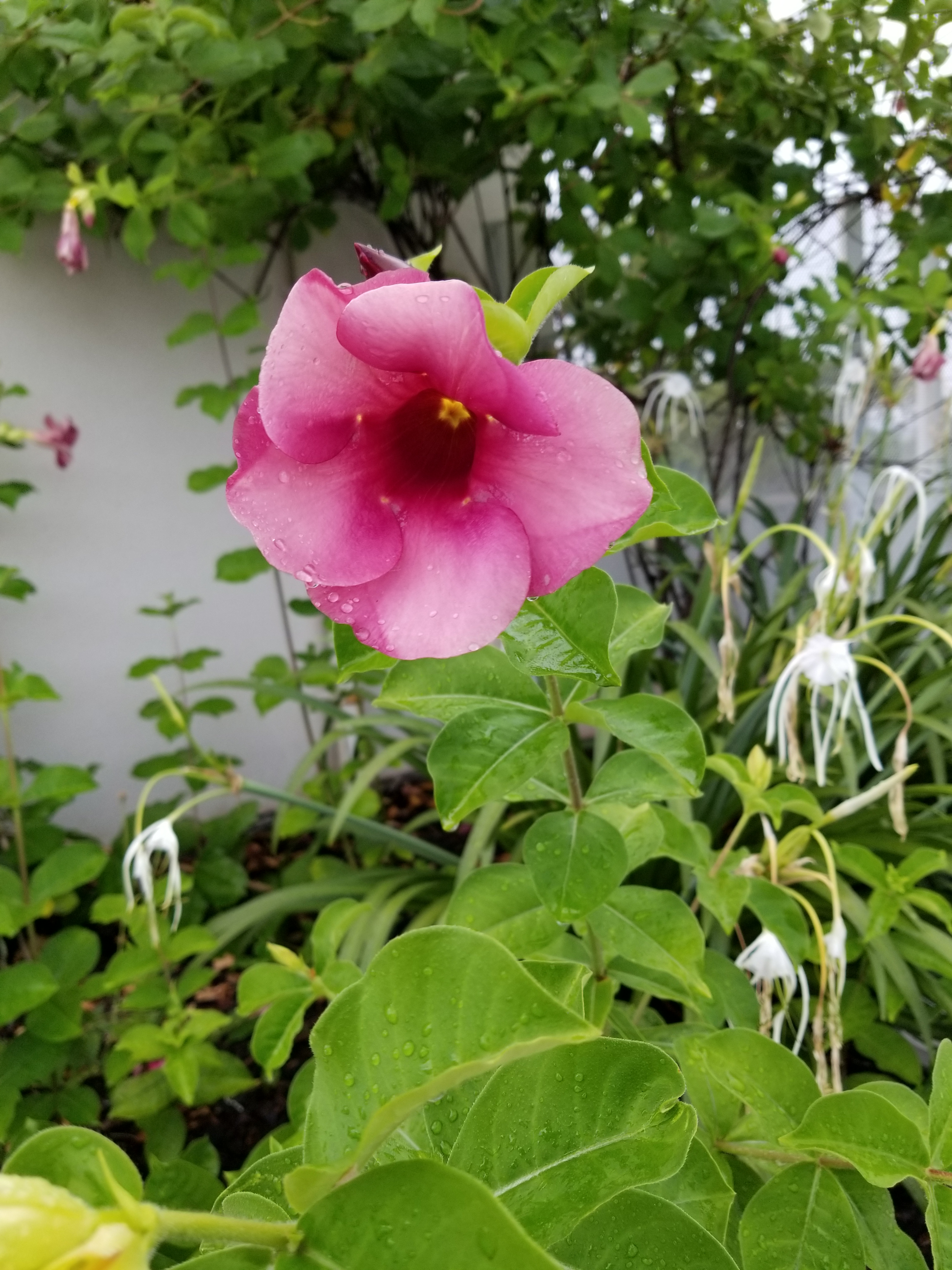
Flowering Plant
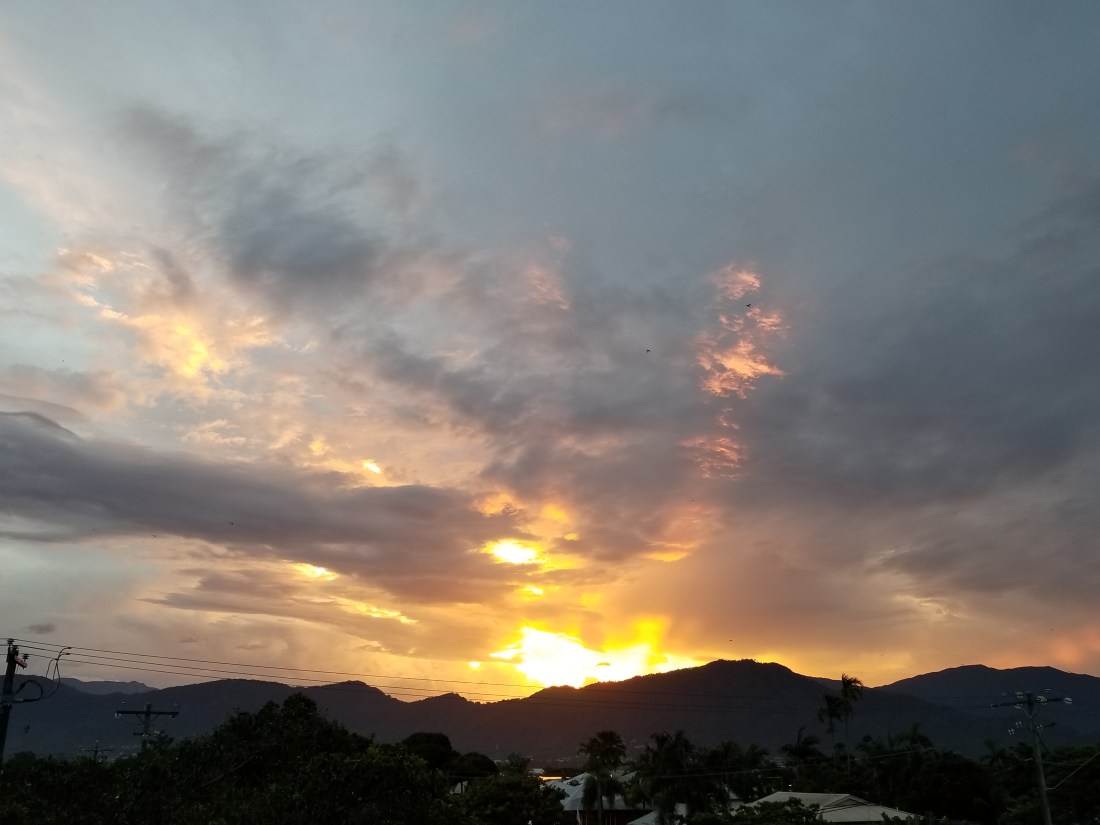
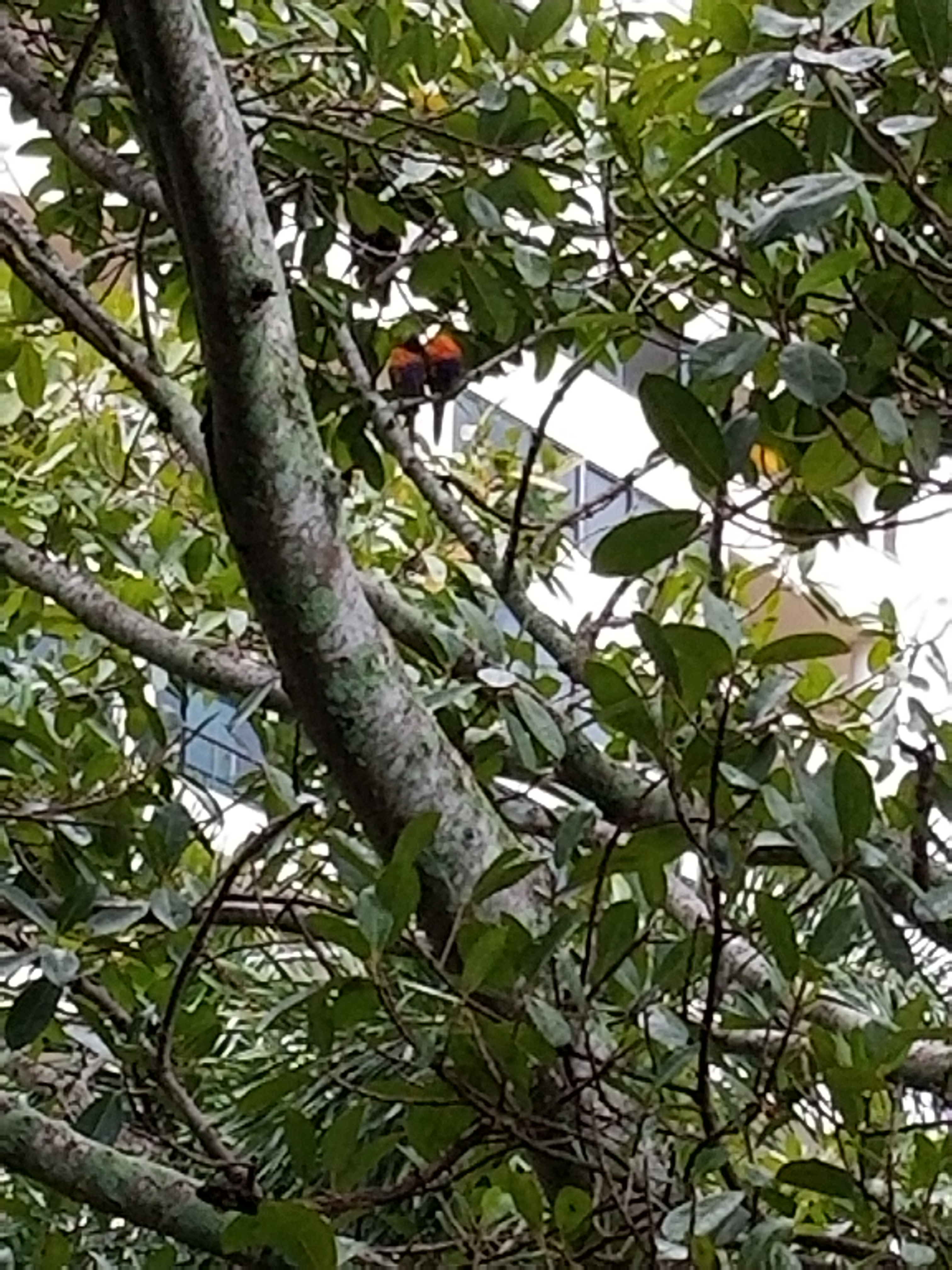
We headed to the Esplande to watch the sunset only to see that the better spot was the mall we’d left earlier in the day. We did see lorikeets and patiently waited for some to settle in the trees where I was able to get a photo.























 Hopper Oz Adventure